1 month ago
54
1 month ago
54
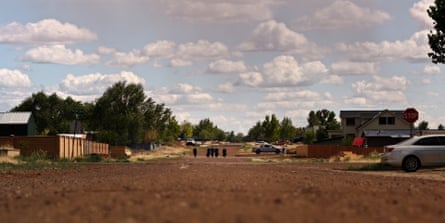
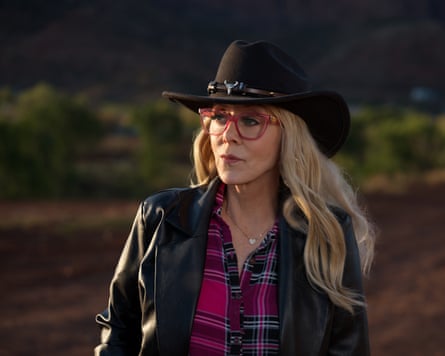
When Christine Marie and her husband, Tolga Katas, packed up their lives in Las Vegas in 2016 to start from scratch in Short Creek, a remote desert town in the Arizona Strip, the odds of fitting in and finding community were surely against them. This was the headquarters of the Fundamentalist Church of Jesus Christ of Latter-Day Saints (FLDS), the secretive polygamist sect, known for its patriarchal control, where women and girls wore prairie dresses and “married” wherever they were placed by their leader. Marie, with her blond ponytail, pink cowboy hat, pink boots and pink glasses, was a former beauty queen, ventriloquist and escape artist, now finishing her psychology doctorate. Tolga, once a rock singer, was a videographer, a city dweller who had never been on a hike.
This is the starting point of the Netflix documentary Trust Me: The False Prophet – and unsurprisingly, the couple’s arrival is met with deep suspicion. What follows, though, is gripping TV, recorded as it happened, but paced like a thriller. Having gained the community’s trust, the couple discover a polygamous, predatory paedophile among them, and a situation of horrifying sexual abuse. Working with the FBI as double agents, they infiltrate this tightly knit cult and ultimately gather enough evidence to secure arrests and convictions.
For most viewers, any initial doubts about Marie will be quickly quashed. It isn’t just her detective skills – though her strategising and self-control are something to behold – it’s her empathy, her clear concern for the victims. The series has become one of Netflix’s most watched shows this year and the response from viewers has been overwhelming. “The whole thing has just been surreal. The last few weeks have been absolutely astonishing to me,” says Marie, 66, over Zoom, dressed in signature pink, of course. She is in Norway, staying with her son for the imminent birth of her grandchild. “People from all different countries are reaching out with their stories, needing help, or telling me how it impacted them. Some have taken action on behalf of their own safety after seeing it. Manipulation and coercion is worldwide, it’s universal.”
Marie expected none of this when she moved to Short Creek. She knew the community would be in disarray since its leader and “prophet” Warren Jeffs had been imprisoned for child sex assault in 2011 – he had married at least 78 women, 24 of whom were underage. Her plan was to support the women and girls who had left the sect because of this, to set up a safe house for survivors and help them heal. She was focused on recovery, not a live “rescue mission”. “I wanted to help people who’d been in these coercive situations,” she says. “I wanted to use my experience and education to help them understand what happened in their brain.”
She was uniquely well qualified. Marie herself had been abused by a “false prophet”, then spent years studying the psychology of how it happened. From the start, she had made the most unlikely Mormon. “I grew up in Michigan with no Mormons around me,” she says. Her parents weren’t Mormons – she converted in high school, having written a paper on religions and decided the Church of Jesus Christ of Latter-Day Saints was her favourite. What drew her? “I was bullied as a child,” she says. “I was tongue-tied, I had a lazy eye. I didn’t have a strong sense of self and the church gave me a purpose. It filled a need – I was special to some group somewhere.” After university, then a stint as a missionary, “I married three weeks after I got home to someone I barely knew,” she says. Marrying young, guided by intuition, is not unusual in the Mormon faith. They had four children, then divorced. “We’re still good friends but we weren’t meant to be together.”
As a single mother, Marie developed a family ventriloquist act, her children performing alongside her. “We did school assemblies and motivational entertainment and I added a few other talents such as escape artist and auctioneering.” Then, at a Mormon singles dance, she met the man who blew up her life.
Marie doesn’t hold Mormonism responsible – manipulation and abuse, she says, can happen anywhere, in any institution or organisation. But it did make her vulnerable. “As a Mormon, I did a lot of decision-making based on feelings, rather than logic,” she says. “My first marriage did not work out, I needed to find my eternal companion, so I prayed about it, then I had this really profound, realistic dream.” In it, she saw a face. “Mormons believe that God can answer prayer through dream so that was it,” she says. “That was my answer.” Then she met the man whose face matched. “It had such power over me,” she says. “That’s why I was successfully lured into his web – because he always played on that dream. He was quite the manipulator.”
The “relationship” lasted just nine months but, Marie says, she was lucky to have “stayed alive” that long. He convinced her that he was the new true prophet and she had to follow his directions: a series of “tests” that would eventually bring her the knowledge she needed for the Second Coming of Jesus Christ – a core tenet of the faith. For years, Marie had been taught that obedience and submission were essential for godliness. “There were so many red flags,” she says. “I did question, but my critical thinking was gone.” He convinced her to sell all her possessions to raise money for his “foundation”. He assigned her to live in a small, dark, dirty hotel room (her children stayed with friends or their father.) Then he sent men to have sex with her.
One of those men “rescued” her. “He came to exploit me, and ultimately had a change of heart and told me the truth about my false prophet,” says Marie. “All of a sudden, the red flags I’d been ignoring came crashing in. Instantly I knew that I had not listened to my gut instinct, because of that dream, because of my flawed way of thinking. I’d gone from being a motivational speaker running a successful business and having respect in the world, to a lonely person in a hotel room, interacting with men, any one of whom could have killed me at a moment’s notice. My brain was just fried. I felt like a character who had stepped out of a videogame to see life for what it was in reality.”
Arriving in Short Creek almost two decades later with her second husband, Tolga, Marie hoped to help the women and girls, perhaps former wives of Warren Jeffs, who were in that same state of shock. Instead, she found another “false prophet”: Samuel Bateman.
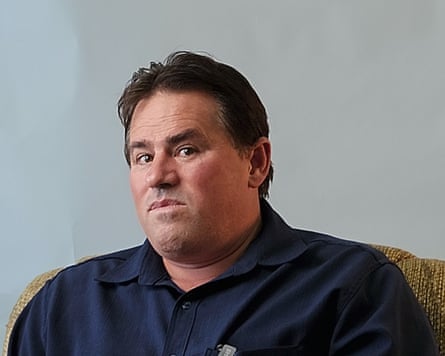
At first, says Marie, Bateman seemed like a “normal FLDS guy”. Gradually though, he began surrounding himself with women and girls and formed a splinter sect, the “Samuelites”, claiming that Jeffs was dead, and speaking through him (Jeffs is still alive and in prison, and some FLDS members still regard him as a prophet). Three other men joined Bateman, bringing their wives and children, who were all “surrendered” to him. In total, Bateman gathered about 50 followers. He had 23 wives, 10 of whom were under 18, with some as young as nine. (The Netflix series takes pains to digitally conceal the faces and voices of minors and potential victims to protect their identities.) Marie made repeated reports to the police, but was told they needed proof that these relationships with children were sexual – so the couple set about finding it. They gained Bateman’s trust and were invited to make a film about him and his life. Bateman – who is often seen in a white leather jacket, driving around in his new Bentley – was hoping to become famous and planned to entice Queen Elizabeth to Short Creek to become one of his wives. (Somehow he manages to be monstrous and ridiculous all at once.)
In one excruciating scene – and there are many – Bateman takes Marie and Katas on a drive and relays how, earlier that week, God had instructed him to watch his male followers having sex with certain girls, one of whom was 13. Bateman had obeyed, even though, he says, “there could not be anything worse than another man screwing my girls”. It was the first time that the sexual abuse of children had been clearly stated.
“Even talking about it now, my blood pressure is rising,” says Marie. “I remember having to overcome a feeling of paralysis. It was really hard to not have a reaction that felt natural, and I almost blew it by asking the girls if they’d experienced any trauma. I didn’t have a plan yet but I knew I couldn’t let him think I was not OK with it. When I got out the car, it took me a few minutes to gather my brain because I was dealing with my own flashbacks.”
Acting as allies to Bateman, friends and confidants to his “wives” and informants to the FBI took its toll. “Tolga and I would just get in the car and drive around and talk and talk as we were afraid our house was bugged,” she says. “I had to be in therapy at the same time to deal with the conflict of knowing I was going to hurt the women and girls [by betraying their trust and shattering their worldview], when I already considered them victims.” She saw herself in them. “When I watched the girls all loving on Sam, I just felt sick in my stomach. I knew they were younger versions of me – and I knew that, some day, they would realise that is not love; that is actually survival.”
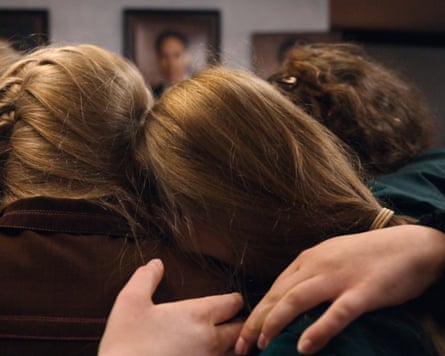
Bateman and some of his followers were finally arrested in 2022. He is now serving a 50-year sentence for conspiracy to commit transportation of a minor for criminal sexual activity, and conspiracy to commit kidnapping. For Marie, entrusting the story and their many years of footage to a film company was a huge step. Ten years earlier, she had shared her own story for a documentary and the result has been devastating. “The online reaction, blaming me for the harms against me, was horrifying. It was the worst thing I’d ever experienced in my life.” The abuse, she says, had taken place in private. This was a public shaming. It led her to her PhD in media psychology – her focus was trauma caused by victim shaming and misrepresentation in the media.
“We wanted what had happened in Short Creek to be told because this could happen again. We wanted to help prevent it,” she says, “but victim sensitivity was my number one priority. We had so many conversations with the director, Rachel Dretzin, about my fears that the victims would be blamed. Once [the film-makers] took the project, they had complete control. We didn’t even see it until two weeks before it aired.”
Watching it was overwhelming. “Oh my goodness, I was on fire with a cocktail of emotions and humbled by how wonderfully they put it together.”
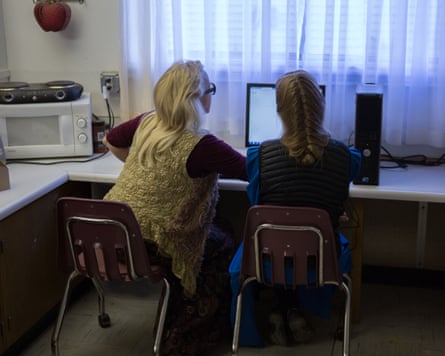
Her greatest relief was for two key characters who turned to Marie for help, and helped to expose Bateman: Julia and Naomi, AKA “Nomz”. Julia was the wife of one of Bateman’s followers, and had been moved into his home. Nomz was perhaps Bateman’s most devout and devoted wife. She ultimately gave evidence against him.
“I love Julia so much. She took such a risk and so much heat and she was portrayed as the hero that she is,” says Marie. “With Nomz, [the film-makers] unpacked it in such a way that people could understand there’s nothing wrong with the women who find themselves in these situations. As human beings, we like to think we’re superior when someone else gets stuck in a web. The people who say, ‘That would never happen to me’ are probably the most at risk because they’re not on guard. This could happen to anyone under those same circumstances.”
Nomz, now 27, left the FLDS, the only life she had ever known. She is studying psychology at college, partly in an effort to understand what happened to her, and also singing – her dream is to be a pop star. “She’s just an extraordinary young lady and she’s like a daughter,” says Marie. “She calls us her ‘godparents’ as she doesn’t know how to describe our relationship to people. Godparents usually come when you’re a baby – but, in a way, she is a baby in this world, exploring with fresh eyes, everything’s new. She had the courage to be the first of Sam’s wives to speak out and she has taken a lot of heat for this in her relationships with the community.” While all of Bateman’s underage victims gave evidence against him, many of his adult wives remain loyal.
Both Nomz and Julia still live in Short Creek, and Marie has no plans to leave either. “I love it so much,” she says. “I love waking up and seeing the beautiful glowing mountains. I love the friends that we’ve made, all the people who have been through so much, and are so sensitive.” She’s busy now with various writing projects, and also developing training programmes for law enforcement agents. Their home has become a small animal sanctuary – residents include a draft horse, a micro-cow and a miniature donkey, chickens, cats, chihuahuas and a great Dane – and also a refuge for whoever needs a place to stay. “That includes people who have left the church and people still in it,” says Marie. “It doesn’t matter to me if people are still strongly attached to the religion that they’ve grown up with. All that matters is that they also learn to think for themselves.”