2 months ago
55
2 months ago
55
An alleged rapist who is suspected to have evaded justice for nearly 20 years carried out an “exponential” rise in online searches about the case when it emerged police were investigating a new suspect, a court has heard.
Paul Quinn, 51, is accused of raping and violently beating a woman in 2003 in an attack that led to the wrongful conviction of Andrew Malkinson, who spent 17 years in prison in what jurors were told was one of the worst miscarriages of justice in Britain.
Quinn was arrested in December 2022 when DNA tests linked him to saliva on clothing left by a bite that partly severed the victim’s nipple, the jury was told. He denies two counts of rape, one count of attempt to strangle and one count of assault intending to cause grievous bodily harm.
Quinn researched the case online before there had been a “substantial wave of publicity” about Malkinson’s case, a jury at Manchester crown court heard on Thursday.
John Price KC, prosecuting, said of Quinn: “He was someone who had little interest in what might be called news outlet websites. He very rarely visited them. But that being the case in general, the evidence shows there was one news story that did catch his eye and it was the Andrew Malkinson campaign – and Mr Quinn was on to it before it became prominent in 2020.”
In September 2019, Quinn looked up a story from 2004 from the original trial, the court heard. Minutes later, he searched Google for “wrongly convicted cases uk”, jurors were told. Two months later he looked up an article about Malkinson on a website called the Justice Gap.
“This was 15 years after the event and three years before he learned of the evidence that made him a suspect,” Price said.
On YouTube, he entered “police searching you” and in October 2021, while living in Exeter, he searched on Google Maps for the crime scene, near where he had lived at the time, the court was told.
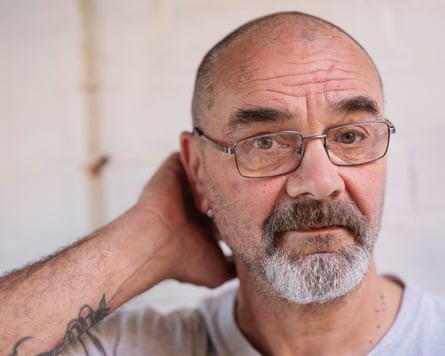
Jurors heard that the Malkinson case “gained a new prominence” in July 2022, when the Guardian revealed a new suspect was implicated in the attack as a result of fresh DNA analysis. Price said: “Suddenly the story was about not only Mr Malkinson but that other man.”
There was a “very profound” change in Quinn’s internet habits from this point, the jury was told, and in the weeks that followed there was an “exponential rise” in his reading of online news. He visited the Manchester Evening News 249 times in the next three months and made more than 200 further news searches, the court heard.
Quinn also carried out several searches about “how long is DNA kept in database” – he had provided a DNA specimen to police in 2012 – and queried “why do i keep sweating all the time… why am I sweating so much all of a sudden”, the court heard.
This was before his arrest on 13 December 2022, when Quinn was told for the first time his DNA had been found on the victim’s clothing, jurors were told. Price said Quinn may claim that his online research simply showed an “understandable interest in press stories about a notorious event which had happened close to where he then had lived”.
However, the prosecutor said, Quinn made no mention of his recent interest in the case to police after his arrest, when he told officers he recalled reading in 2003 that someone had got “done for it” and he “just forgot about it”.
Jurors were told that these internet searches were found in Quinn’s online history but not on an iPhone seized by police during his arrest. In police interviews, he repeatedly denied the rape and claimed his DNA may have been found because he “slept with literally hundreds of women” in the local area.
Price said: “By the time [his arrest] happened on 13 December 2022, bearing in mind what he was looking up, was Paul Quinn expecting the police to come calling? Had he prepared in advance his story about unprotected, unrestrained sexual promiscuity? Did he assume that the person whose DNA had been found was him because he knew it was?”
Malkinson’s case was referred to the court of appeal three times in 17 years before his challenge was allowed in July 2023. He had been released from prison in late 2020, the court heard.
The trial continues.