2 months ago
79
2 months ago
79
Opening summary
Hello and welcome to the US politics live blog.
John Bolton, former national security adviser to Donald Trump, is expected to plead guilty on Friday to charges that he unlawfully retained sensitive national security information.
The agreement with federal prosecutors includes a $2.25m fine, according to sources familiar with the deal.
Bolton is expected to plead guilty to one count of retaining classified information, which is specifically related to diary entries about his work during Trump’s first term. The former adviser, who is now a prominent critic of Trump, was accused of transmitting some of these materials to two relatives.
The trial is scheduled to take place in Greenbelt, Maryland, on Friday – and a possible sentence could range from no jail time to five years.
In October, Bolton pleaded not guilty to charges of mishandling classified information when he worked in the Trump White House.
“This was a very difficult decision for him,” the source close to Bolton said to NBC, in relation to his expected guilty plea. “Most importantly, he is doing what leaders do and taking responsibility.
“He understands that if he went to trial what that would mean, which essentially would be the disclosure of many, many more classified documents that he would need to reveal to defend himself. And given the Ukraine and the Middle East, he didn’t want to do that.”
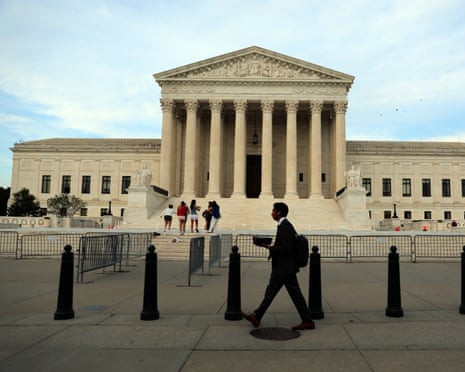
Elsewhere, the supreme court conservative majority passed two new rulings on Thursday that allowed the Trump administration to strip certain immigration protection and fundamentally reshape the asylum system in the United States.
This means that the court has allowed the administration to move forward with policies that could remove more than 1 million people from the US, and could also possibly prevent others from entering.
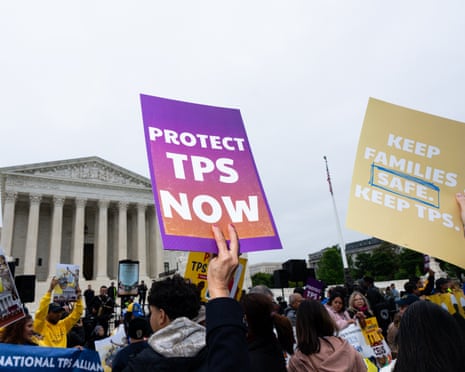
Dozens of groups, advocates and members of Congress called the court’s decisions “disastrous” and “cruel”, while the Trump administration, Republican lawmakers and anti-immigrant groups celebrated the rulings.
In case after case, the court, which has a 6-3 conservative majority, has green-lighted Donald Trump’s policies targeting both legal and illegal immigration with few exceptions, while its three liberal justices have objected to most of his actions.
This will mostly impact Haitian and Syrian immigrants, with hundreds of thousands expected to be stripped of their Temporary Protected Status.
“The Trump administration has turned the immigration system into a deportation machine,” said Elora Mukherjee, director of the Immigrants’ Rights Clinic at Columbia Law School in New York.
“In most cases, the supreme court has been a rubber stamp for Trump’s mass deportation agenda,” Mukherjee added.
Here’s what else is happening:
-
The supreme court also expanded the constitution’s second amendment right “to keep and bear arms”. This includes a ruling that will remove a Hawaii law that required gun owners to get an owner’s permission before bringing a handgun on to private property open to the public – such as shops and restaurants.
-
In Texas, it is expected that a new law will be put into place which would require almost 5 million school pupils to compulsorily study the Bible. This comes as part of a wider effort to put more Christian teachings into schools.
-
Advisers to the Food and Drug Administration (FDA) will soon hold a meeting about whether to ease restrictions on access to some research peptides, a group of drugs with a zealous after and thin evidence to support them
Key events
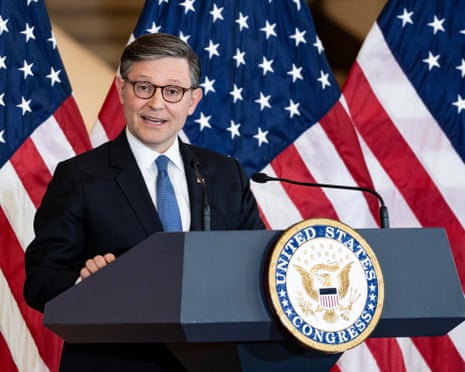
Johnson says he will send housing bill to Trump's desk
In case you missed it yesterday, House speaker Mike Johnson said he was sending the bipartisan housing bill to Donald Trump’s desk, a day after the president abruptly cancelled its signing as he tried to pressure the Senate to pass the unrelated Save America Act.
Johnson told reporters after his lengthy crunch-time meeting with the president that they are “on exactly the same page”, though he didn’t mention the housing bill specifically.
And it’s important to note that Trump has not yet committed to signing the legislation, despite the fact that the bill has overwhelming bipartisan support and his own party is keen to use it to show voters they’re working to lower living costs ahead of November’s midterms.
By formally sending the bill to the president’s desk, Johnson has opened the 10-day window (excluding Sundays) during which Trump must decide whether he will sign or veto the legislation. If he doesn’t do either, it automatically becomes law without his signature.
For his part, after the meeting Trump publicy urged House GOP hardliners to stop “grandstanding” and to unify after they brought most activity in the lower chamber to a halt earlier this week over the Save Act.
“House Republicans should unify, and stop voting down ‘Rules’ or, threatening to do so. Giving power to the Radical Left Dumocrats in the House to control what goes up for a Vote will make our outcomes worse, not better. No more grandstanding, please! They are the Dumocrats, and we can’t let them WIN!” Trump wrote on Truth Social.
While the president threw him a lifeline, Johnson’s headache is by no means over. Florida Republican Anna Paulina Luna, who’s leading the hardline rebellion, wrote on X after Trump and Johnson’s meeting that she had submitted an amendment to the House rules committee to attach the Save Act to the annual defense bill.
But per Axios, Luna told reporters yesterday that she is not promising to support next week’s rule if leadership blocks that effort.
Alarm over ‘extreme’ sentences for anti-ICE protesters convicted of terrorism

Sam Levine
The decades-long prison sentences for a group of Texas activists convicted of terrorism and other charges in connection to a Fourth of July protest last year has caused widespread alarm, given their unusually punitive length and for the apparent harsh criminalization of protest activity under Donald Trump’s justice department.
Eight people who participated in a protest at the Prairieland ICE detention facility in Alvarado, Texas, were sentenced on Tuesday to between 50 and 100 years in prison. A ninth person, Daniel Sanchez-Estrada, the husband of one of the demonstrators, did not participate in the protest, but was sentenced to 30 years in prison after he was convicted of moving boxes containing leftwing zines and other materials after a prison phone call from his wife.
“These sentences are a travesty and totally unjustified, but that’s the point. Americans hate the fascist Trump regime, so the only way they can try to cling to power is brute force,” the representative Rashida Tlaib, a Democrat from Michigan, posted on X. “More bullshit ‘terrorism’ charges like these are coming.”
Sanchez-Estrada’s sentence in particular has been condemned by first amendment advocates, who say that it sends a chilling message about the kind of ideological material people are allowed to possess.
Seth Stern, the chief of advocacy at the Freedom of the Press Foundation, said in a statement:
[The zines Sanchez-Estrada was punished for moving are] no different from the pro-Revolution pamphlets this country’s founders had in mind when they drafted the first amendment’s press clause.
Sanchez’s case is the latest example of the Trump administration grasping at any legal straws it can to criminalize disfavored ideologies and writings, from conflating dissent with terrorism to deporting immigrants who report on protests or criticize wars the US bankrolls.
Americans should not make the mistake of believing Sanchez’s sentence only threatens immigrants, leftists or so-called antifa members – they’re just the low-hanging fruit, not the endgame.
Here’s Sam’s report:
Opening summary
Hello and welcome to the US politics live blog.
John Bolton, former national security adviser to Donald Trump, is expected to plead guilty on Friday to charges that he unlawfully retained sensitive national security information.
The agreement with federal prosecutors includes a $2.25m fine, according to sources familiar with the deal.
Bolton is expected to plead guilty to one count of retaining classified information, which is specifically related to diary entries about his work during Trump’s first term. The former adviser, who is now a prominent critic of Trump, was accused of transmitting some of these materials to two relatives.
The trial is scheduled to take place in Greenbelt, Maryland, on Friday – and a possible sentence could range from no jail time to five years.
In October, Bolton pleaded not guilty to charges of mishandling classified information when he worked in the Trump White House.
“This was a very difficult decision for him,” the source close to Bolton said to NBC, in relation to his expected guilty plea. “Most importantly, he is doing what leaders do and taking responsibility.
“He understands that if he went to trial what that would mean, which essentially would be the disclosure of many, many more classified documents that he would need to reveal to defend himself. And given the Ukraine and the Middle East, he didn’t want to do that.”
Elsewhere, the supreme court conservative majority passed two new rulings on Thursday that allowed the Trump administration to strip certain immigration protection and fundamentally reshape the asylum system in the United States.
This means that the court has allowed the administration to move forward with policies that could remove more than 1 million people from the US, and could also possibly prevent others from entering.
Dozens of groups, advocates and members of Congress called the court’s decisions “disastrous” and “cruel”, while the Trump administration, Republican lawmakers and anti-immigrant groups celebrated the rulings.
In case after case, the court, which has a 6-3 conservative majority, has green-lighted Donald Trump’s policies targeting both legal and illegal immigration with few exceptions, while its three liberal justices have objected to most of his actions.
This will mostly impact Haitian and Syrian immigrants, with hundreds of thousands expected to be stripped of their Temporary Protected Status.
“The Trump administration has turned the immigration system into a deportation machine,” said Elora Mukherjee, director of the Immigrants’ Rights Clinic at Columbia Law School in New York.
“In most cases, the supreme court has been a rubber stamp for Trump’s mass deportation agenda,” Mukherjee added.
Here’s what else is happening:
-
The supreme court also expanded the constitution’s second amendment right “to keep and bear arms”. This includes a ruling that will remove a Hawaii law that required gun owners to get an owner’s permission before bringing a handgun on to private property open to the public – such as shops and restaurants.
-
In Texas, it is expected that a new law will be put into place which would require almost 5 million school pupils to compulsorily study the Bible. This comes as part of a wider effort to put more Christian teachings into schools.
-
Advisers to the Food and Drug Administration (FDA) will soon hold a meeting about whether to ease restrictions on access to some research peptides, a group of drugs with a zealous after and thin evidence to support them