2 months ago
83
2 months ago
83
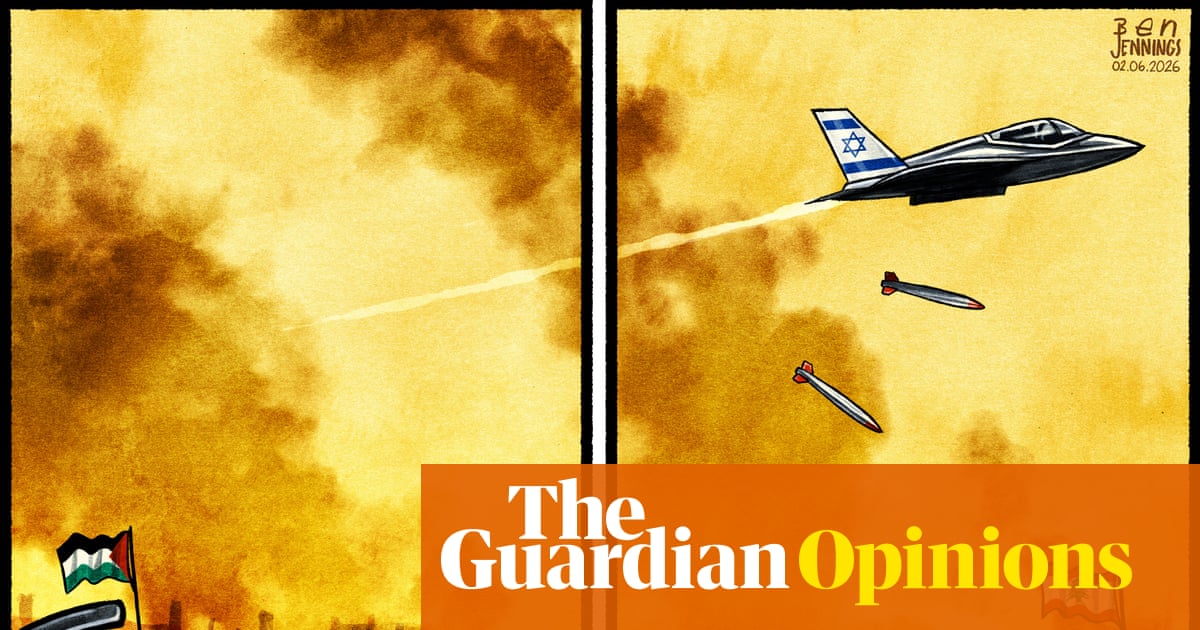
In retaliation for the US-Israeli missile attacks, Iran has launched what amounts to all-out economic warfare. Should the conflict continue even for another week, its impacts will start to be felt around the world as the third price surge since the pandemic washes through global markets.
For Britain, a further turn of the screw on living standards arrives just as political instability mounts at home, with the Labour and Conservative parties facing existential challenges to their left and right.
Keir Starmer’s half-cocked response to war reflects a deeper, strategic problem for the UK: an economy built over decades for a globalised world cannot fit into a world where globalisation is falling apart.
The creation of a tightly woven, world-spanning economy has also created points of huge stress and tension, where the flows of manufactured goods, people and raw materials that sustain it must pass through the narrow spaces of our globe.
These include the 40-mile-wide Malacca strait, a channel for 80% of China’s imported oil flows; the Panama canal, only 91 metres at its narrowest point; the Bab el-Mandeb strait, between Yemen and Eritrea, through which 40% of trade between Asia and Europe passes; and the strait of Hormuz, a route for one-fifth of the world’s oil.
Accidental, natural or intended, the effect of a blockage on any of these channels is the same. When, in 2024, the Panama canal was restricted by drought and the Houthis were blockading Bab el-Mandeb, the combined effect was to contribute 0.6 percentage points, or about one fifth of the global inflation over the year as shipping companies diverted away from both routes. The climate crisis has become a force multiplier for asymmetric warfare: extreme weather, such as central America’s multi-year drought, amplifies the disruptive potential of choke-point closures elsewhere.
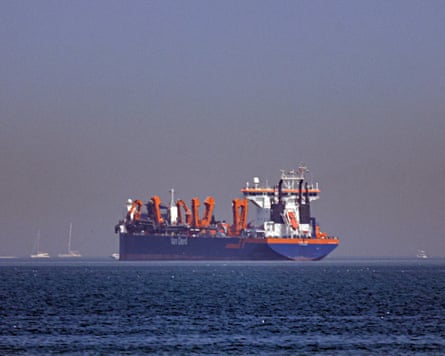
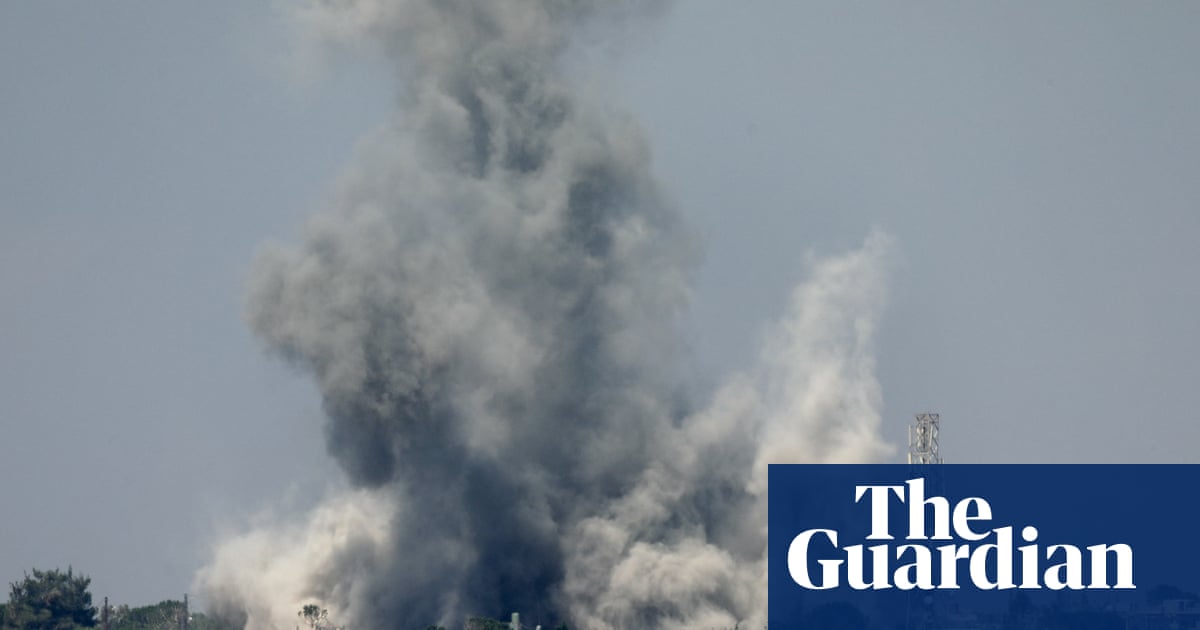
Today, the straits of Bab el-Mandeb and Hormuz, narrow apertures either side of the Arabian peninsula, are in effect under a blockade. But now it is the other great, global system of the world economy – its financial network – that multiplies the pure military threat. The decision by major insurers to cancel war-risk cover across the Persian Gulf in effect closes both straits to shipping. Washington, scrambling for a response, has pledged to provide its own insurance, plus navy escorts – but both could take weeks to organise.
Those shocks ripple around the world, but few developed countries are as exposed to choke points and raw material pressures as Britain. In a brilliant essay, the political economist Helen Thompson details how the wrenching turn to embrace a globalised world, encompassing the unleashing of the City of London on one side and the deindustrialisation of the north of England, Scotland and Wales on the other, left the UK uniquely vulnerable to the kinds of pressures today being exploited so mercilessly by Iran.
Britain buys far more from the rest of the world than it sells to it, which means, in practice, it is reliant, collectively, on the rest of the world to maintain what passes for the standard of living in the UK.
This external dependency is in two parts. The first is less serious and has, especially since the 2008 financial crisis, tended to attract more attention. Because Britain has so little to sell to other countries but wants to buy from them, it ends up in effect borrowing from everyone and selling off assets to try to cover the difference.
As a result, the UK is dependent on what Mark Carney, the former Bank of England governor turned Canadian prime minister, called the “kindness of strangers”. In other words, Britain can carry on running this imbalance for as long as the rest of the world is prepared to finance it.
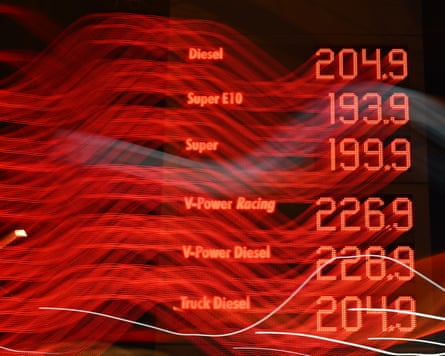
The result, over time, is that the UK has built up extraordinarily large debts, concentrated in its financial institutions. According to Bank of England figures, Britain owes about 550% of UK GDP to the rest of the world, far above any other G7 country. If the kindness of those strangers ever wears thin, the UK could face some combination of rapidly exiting capital, a collapse in the value of the pound and soaring interest rates.
In principle, this dependency is solvable because it depends not on real, physical stuff, but on agreements about pieces of paper and numbers in computer systems. Supporters of modern monetary theory take this truth and use it to talk up the ability of the British government to issue money or ignore its debt. Monetary constraints, they argue, are ultimately not a real constraint on economic activity, and at least in principle, it is possible to imagine a world in which the UK agrees to renegotiate its various debts with everyone else and so reduces this overwhelming external exposure.
Unfortunately, this hideously complex problem is the easy part of Britain’s external dependency. The hard part, the one that Thompson zeroes in on, is something approaching an intractable issue. The UK is not only dependent on financing from the rest of the world; fundamentally, it is dependent on material resources from other countries to keep people fed, warm and with the lights on.
This became dramatically apparent only a few years back, when Russia’s invasion of Ukraine resulted in a catastrophic spike in Eurasian gas prices. Britain imports about 50% of the natural gas it uses, for electricity and for heating, and this is the “particular vulnerability” that Thompson highlights. It means war at the other end of Europe became, in the space of a few months, a disastrous worsening of living standards for most people as gas prices soared.
Britain directly imports about 40% of the food it consumes, a percentage that is steadily rising, leaving it exposed to upsets in food markets around the world – whether from extreme weather disrupting harvests or, as today, geopolitical shocks.
Worse, since the UK has to import virtually all the artificial fertiliser its intensive agriculture demands, as well as the energy needed to fuel tractors and warm greenhouses, the true dependency of food consumption on imports in Britain is far higher. Swati Dhingra, a Bank of England rate-setter, estimated the figure was closer to 80%. Defra’s national security report, finally released in January, emphasised the severe vulnerability of Britain’s food systems to climate breakdown and biodiversity loss.
We are today in the early stages of a Ukraine-style shock. European spot prices for natural gas have risen 40% in the last few days; in the UK, where the market is inevitably tighter, the price spike is far larger, with spot prices almost doubling since the weekend.
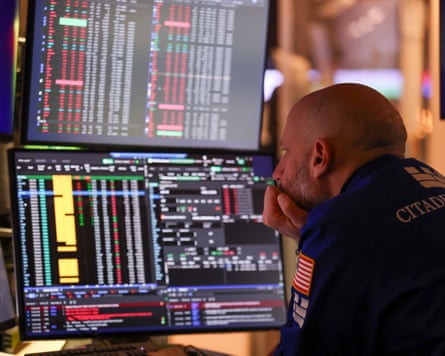
For now, households are somewhat protected, thanks to the haphazard mechanism of the energy price cap, introduced in 2019. But the next move in that cap is due in July, and Ofgem, mechanically processing the data and duty-bound to protect privatised profits, is likely to announce a dramatic jump in domestic energy prices.
Meanwhile, about 15% of the world’s grain trade moves through the Bab el-Mandeb strait, and we can expect hydrocarbon-intensive fertiliser prices to rise closely with fossil fuels. Compounding the risks of poor harvests seen in the Mediterranean, food prices in the UK could soon start to rise.
But these prices are not about bits of paper or numbers on a computer screen. They represent a real balance of material resources and consumption, and that makes them incredibly hard to shift. Britain could, over time, try to reduce its dependency on imported oil and gas, and this is a very solid argument for pushing for a China-style transition to renewables – something Ed Miliband, the energy secretary, stresses.
The UK could also support a transition of its food system away from its import dependencies, for example, reducing dependency on artificial fertiliser, making greater use of new farming techniques – from drones to vertical farming – and encouraging more home and allotment use.
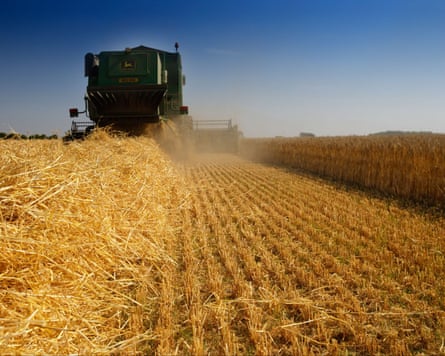
Perversely, climate breakdown, disruptive as it is, may be making some parts of this shift easier in Britain, for a while. The first rice has been grown in Cambridgeshire, for example; the first pressing of olives from Essex took place last summer; populations of at least some sea creatures, such as native oysters, are booming. As the balance of economic activity shifts northwards, including the opening up of Arctic Sea routes to trade, the UK’s deindustrialised northern towns and cities could experience new leases of life.
But all of this takes time. And it will take major investment, which is far harder to finance today than before thanks to rising inflation and the increasing costs of borrowing. The “big push” this needs to start with has to be met with redistribution downwards – first in tax terms, via wealth taxes and a broader overhaul of the system, chasing down profiteering and rent-seeking, and second, in shifting market prices.
The latter will require breaking the outdated taboo on price regulations and caps – and any surge in energy prices today should be met with controls that protect households while respecting climate ambitions, taxing super-profits in energy and defence. If the situation worsens and the price of basic food surges once more, the demands for government to intervene will also grow louder and more determined.
This is the secret that ties rural East Anglia to urban Hackney: a visible environmental crisis in the countryside is linked to a silent food-price crisis in cities, and both are left exposed to geopolitical shocks. The politics that can tie both sides of this equation together are the politics of the future.
-
James Meadway is the host of the Macrodose podcast