2 months ago
78
2 months ago
78
If there’s a young adult romance on TV, we millennial women will watch it. Throw in a love triangle or an emotionally available hockey player having an open conversation about consent, and you’ve got yourself a recipe for a cultural phenomenon. Cover it in girlhood nostalgia and serve it to us every summer for our inner teenager to swoon over.
Teen girl-centric dramas have taken streamers by storm in 2026, with love stories reminiscent of a Taylor Swift song that leave viewers smitten for boys half their age. The likes of hockey romance Off Campus or poetically charming drama Every Year After take a sensational soundtrack and add some coming-of-age pains, friendship dramas and relationship dilemmas.
Last summer, 25 million viewers tuned in to see how a love triangle involving two brothers played out, with The Summer I Turned Pretty drawing huge numbers to the first two episodes of its third and final season. The New York Times reported that the audience for this adaptation of Jenny Han’s best-selling novel was predominantly made up of women age 25-55 – not quite the “young adults” Han’s readership is categorised as.
Girl-coded cult classic Legally Blonde is the latest to get the teenage treatment. Its new 90s-set prequel series follows Elle Woods as a junior in high school to mark the film’s 25th anniversary. Elle begins as it means to go on, washed head to toe in a pink that Barbie would be proud of. Opening with a lavish sweet sixteen birthday bash, it’s a world where school features ultra-stylish girl groups, cute car phones, enviable walk-in wardrobes and ridiculously attractive boys.
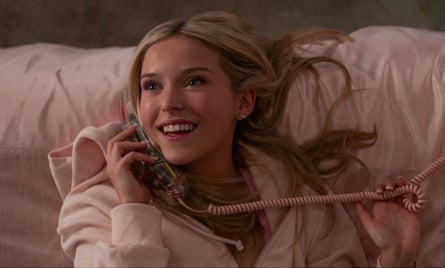
At 16, Elle Woods (played by relatively unknown actor Lexi Minetree) declares that she “knows exactly who she is and what she wants.” A five-year-plan? Sorted. A perfect first kiss? She’s laying the groundwork. Her friendships? All set. With that teenage naivety of living in ignorance of the reality of womanhood, Elle is thriving in her safe, steady bubble of girlhood. That is until her dad botches a high-profile nose job and relocates the family to the ever-grey Twilight-esque city of Seattle. A devotee of colour, California charm and peppy small talk, Elle is thrown from her Barbie dreamhouse into a world filled with hoodies, calls for social justice and a strong dislike of blond girls who think “pink is a personality”.
The show owes its existence to the original Elle Woods – Reese Witherspoon. She felt that “the world could use a little Elle Woods” – all that determination and positivity – and her insights into the character helped the creative team to build the show.
“It’s always fun to explore life as a teenager,” says Lauren Neustadter, president of film and television at Witherspoon’s company, Hello Sunshine. “We’ve all been there.”
Not everyone’s teen years were like this, though. Elle’s 90s and Y2K nostalgia isn’t just about miniskirts, baby tees and car phones. It’s also a reminder of girlhood before the digital age – no red pill culture, social media or worries about explicit images being circulated online. Elle transports us back to a simpler, carefree time of all-consuming crushes on the popular kid, big friendship groups and the safety of knowing that everything will work out in the end.
“How great would it be if we could all go back and say [to our teenage self] ‘it’s going to be OK. Have more joy here. Believe in yourself’?”, says executive producer Caroline Dries. “This is our way of doing that.”
Reconnecting with that time isn’t just a joy for millennial viewers – the writers felt the same way. “When we were making it, we were remembering all of those core moments of our high school experience,” says Dries. “It just shows how monumental that time in our lives was.”
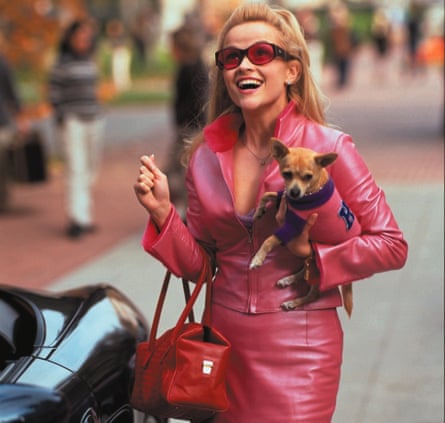
As much as Legally Blonde was the touchstone for this project, creator Laura Kittrell also drew from her own teenage TV obsession, Buffy the Vampire Slayer, hoping to emulate the “specific tone of real teenage stakes, but also having so much comedy and being the ultimate fish out of water”. She also took inspiration from 2000s classics like 10 Things I Hate About You, 90210 and Mean Girls (“[it’s] always in my heart”).
“High school is all about firsts,” Kittrell says, “so now that we know who Elle Woods becomes, it’s fun to watch her experience those first times. The first kiss, first crush, first love. We were really inspired by a moment in the movie when Elle shows up to the party wearing the bunny costume and she walks in and there’s a moment of slight embarrassment then she quickly gets over it. We were thinking, how did she have the confidence to so quickly pivot on a dime like that? We wanted to recreate the first time that ever happened where she did feel more embarrassment.”
As our favourite inspirational will-be Harvard lawyer struggles through a relatable identity crisis, reassurance is laced into the series to combat the immense pressure viewers feel to have everything figured out. Sure, we can’t come home from school and have everything solved with a hug from our mum any more but Kittrell hopes that Elle’s journey emphasises to girls and women that “you’re not alone, everyone feels this and it’s OK to feel this way.”
Teenage girls’ problems are often treated in a way that disparages them, dismisses them – or entirely removes them from the narrative. But friendship fallouts, the first period, awkward encounters with boys are uncomfortable and heartbreaking experiences – which the creators of Elle feel deserve to be acknowledged.
“A lot of teenage shows are very heightened, and there’s certainly a place for that,” says Kittrell. “For us, it was always important that the problems Elle is facing are real teenage problems, as those are things we can relate to, but also should be given the weight they deserve.”
Crafted as a “love letter to the next generation” of girls, Elle is also a love letter to the creator’s young self, and all millennials who lived and loved the humour, heart and validation that these iconic teen girl movies gave them. “If I could relive [girlhood] through this lens of the confidence that I have now, as a kid, would I be a different person?”, says Dries of a question she has wrestled with. “Would I have not gone through those struggles?”
Ultimately, though, the show is more than just feelgood escapism. It’s rooted in an inspirational message. “The way that Reese [as Elle] convinced women to become lawyers?” asks Dries. “Even if it’s just one person, as cheesy as this sounds, who feels like being her authentic self, it is a pretty moving responsibility.”
These stirring tales of girls overcoming familiar struggles that millennial women lived through make us all feel seen. Maybe they can do something really important. Perhaps they can inspire us to reconnect with that younger, less jaded version of us who not only believed in love – but most importantly in ourselves too.
Elle is on Prime Video on Wednesday.