3 months ago
67
3 months ago
67
Jeffrey Epstein wanted his 26-year-old Belarusian girlfriend, Karyna Shuliak, and her friend, Jen, to have a good time in London – and he knew just who to ask.
“Karyna – my girlfriend, and Jen, the tall girl who you’ve met will be London Tues and Wed,” the 63-year-old disgraced financier apparently wrote in April 2016 to an aide to the then Prince Andrew. “They have never been there before. If you are around, I’d appreciate any help you can give them.”
The email’s recipient was David Stern, the director of Andrew Mountbatten-Windsor’s Pitch@Palace business, whose registered office lay within Buckingham Palace. Stern, a German national who is now 48 and believed to live in the United Arab Emirates, was only too pleased to help.
He seemingly emailed Shuliak and suggested they meet at Green Park tube station in central London and then take in the changing of the guard at the palace a short walk away. There would be a further treat, although not one he seemingly wished to explicitly disclose in an email.
“You MUST both take picture ID and the dress code is formal so no jeans or sneakers etc (I know its annoying but it’s very strict). I will then take you to lunch.”
Epstein, who had been invited himself to the palace in the past, was pleased with the itinerary: “I appreciate what you have planned thnx.”
Stern apparently responded: “My pleasure. I am always on your team!!”
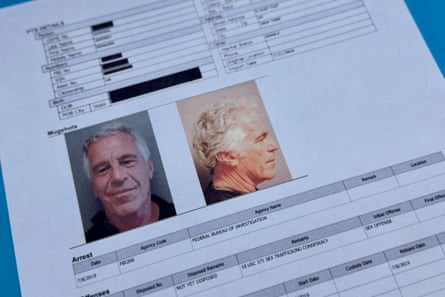
He was true to his word to the financier and convicted sex offender, according to the latest release of millions of documents from the US Department of Justice.
Stern visited Epstein in New York just months before his arrest and suicide in 2019, and resigned from the Pitch@Palace business weeks after receiving the news. Right to the end, Stern was, the documents suggest, Epstein’s man in the palace – seemingly looking for business opportunities, passing messages and directing Mountbatten-Windsor on the financier’s command.
In his infamous Newsnight interview with Emily Maitlis, Mountbatten-Windsor had claimed that he decided to cut contact with Epstein in December 2010 and had travelled to New York to tell Epstein in person owing to his “tendency to be too honourable”.
Emails released through court cases and the Epstein files have already cast serious doubts on those claims, albeit every effort was made at the time to avoid that being publicly known.
After a picture of the royal with his arm around a teenage Virginia Giuffre was first published in February 2011, Mountbatten-Windsor emailed Epstein. “Don’t worry about me!”, he wrote. “It would seem we are in this together and will have to rise above it. Otherwise keep in close touch and we’ll play some more soon!!!!”
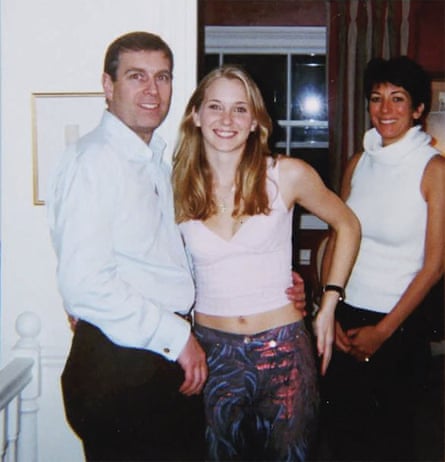
In October of that year, Mountbatten-Windsor appeared even willing to be seen with Epstein, albeit abroad. “PA [Prince Andrew] is chartering his own plane,” Epstein wrote to Stern. “He wants to take me with him. My name will be on the flight-records etc. I feel it is safer to fly separately. Do you agree?”
Epstein was evidently becoming nervous, recognising that it was his association with the royal family that was attracting a lot of the unwanted media attention. He had helped Mountbatten-Windsor’s ex-wife, Sarah Ferguson, with her financial affairs, but she was one of the first Epstein sought to distance himself from.
“Heard from the Duke that you have had a baby boy,” Ferguson wrote in September 2011. “Even though you never kept in touch, I am still here with love, friendship and congratulations on your baby boy.”
There had long been a trusting relationship between Stern, the prince and Ferguson, often referred to as F in correspondence about sensitive matters. “PA has asked me to see a guy who has access to Nigeria oil and when selling it to China (or somebody else) F can make around $6m,” Stern wrote to Epstein in September 2010. “This seems very fishy.”
In an email that year, Stern had also mused about setting up a “small investment highly private office in London with outpost in Beijing, for high net worth individuals – targeting Chinese but not exclusively that works like an extended family office”.
Stern went on that they could “very discreetly make [Mountbatten-Windsor] part of it and use his ‘aura and access’, you take/decide on the investments and I manage the day to day operations”. With regard to another investment idea, Mountbatten-Windsor had suggested Stern could be “a Ghost for me in the up side of this entity”.
He was trusted, then, and by 2011, with Epstein nervous of the media heat from the royal connection, Stern appears to have become the chief interlocutor in relations between Epstein and the prince – most commonly referred to as PA in emails.
“New company name: Witan,” Stern wrote of his UK business in an email to Epstein in February 2011. “PA likes it and since he did not know what it was when I told him it should be safe”.
Stern explained that Witan was the “council of the Anglo Saxon kings in and of England: it’s essential duty was to advise the king on all matters on which he chose to ask its opinion”.
By September of that year, Stern was able to elaborate on how this seemingly clandestine role by Mountbatten-Windsor’s side was developing during a trip with the prince to China and Kuala Lumpur. “Most meetings by now are organised by me except mayors and governors and nothing in KL,” Stern boasted to Epstein. “I stay in the background/hidden, just make the arrangements.”
He kept Epstein abreast of everything, no matter how trivial. Princess Beatrice had got a job with a company called Signia Invest. “This is where PA’s daughter now works (not the cute one),” wrote Stern in June 2012.
Stern’s apparent control over Andrew’s diary and his willingness to take instruction from Epstein in New York is writ large in the emails. In a message to Epstein in June 2013, Stern wrote to Epstein: “PA in Silicon valley on 25. & 26 June. Anyone you want him to see?”
“Yes, Steve Sinofsky,” Epstein responded, CCing the former Microsoft executive. Sinofsky answered: “Please let me know how I can help.”
En route to a trip to China and Vietnam in November 2015, Stern again emailed Epstein, this time about Jes Staley, who had just been made the boss of Barclays. “On my way to Asia with PA,” he said in further email to Epstein. “Any news from Jes?
Epstein responded: “Have PA invite him to the palace etc”.
“Sitting with PA in Vietnam,” Stern wrote. “He just texted Jes. You may want to check.”
Stern updated Epstein the following month. “Jes told PA to meet in Jan when he’s settled in,” he wrote.
Epstein had more instructions a few months later. He had heard that Mountbatten-Windsor was having lunch with the venture capitalist Reid Hoffman. Was he going? Epstein asked. He wanted him there.
“You should meet Reid and tell him that you are part of the club,” Epstein added. Stern said he was already due to have dinner at Windsor Castle but soon after confirmed his place at the lunch.
In February 2016, Stern told Epstein that he had passed on the disgraced financier’s birthday greetings to the prince. “I thought you would want that,” he added.
Stern had lots of ideas as to how the royal could be usefully deployed to their advantage. He emailed Epstein in October 2016 suggesting they buy Deutsche Bank and that the Qatari royal family, its largest shareholder, could be “aligned via PA”.
Epstein responded: “No.” “So what do we buy?” asked Stern. “Dollars,” was the answer.
There appears little doubt that officials in the prince’s office in London knew about the continued contacts.
When the Guardian reported in January 2015 that Mountbatten-Windsor had been accused of sexual abuse in a civil case against Epstein, Stern emailed Epstein: “PA office is asking if your lawyers can give head up in future so they are aware/can prepare etc?”
Stern said he would pass on Epstein’s own anger at the statements put out by the palace over the story. “Before PA attacks me, it would have been nice to have a heads up,” Epstein wrote. “I understand he has his needs but going further than necessary has caused many problems this side of the Atlantic.”
Stern agreed that he would find out who issued a “stupid” statement.
The sharing of information continued almost up to Epstein’s arrest. “Today in Tokyo with PA,” Stern wrote to Epstein as late as February 2018. On the same trip, Epstein was informed by Stern that he was with Mountbatten-Windsor off the Pacific island country of Palau next to a boat owned by the computer programmer and investor Paul Allen.
It was a short response from Epstein, and perhaps indicative of his state of mind: “Not well. Take photos?”
Andrew Mountbatten-Windsor and David Stern were both approached for comment.