2 months ago
37
2 months ago
37
With 30 people inside the neighbourhood bomb shelter on Sunday afternoon, and sirens wailing outside, Oren Katz went to close the reinforced door.
It was an act of generosity that was typical of the father of four, and it would cost him his life. As he reached the entrance, the shelter took a direct hit from an Iranian missile.
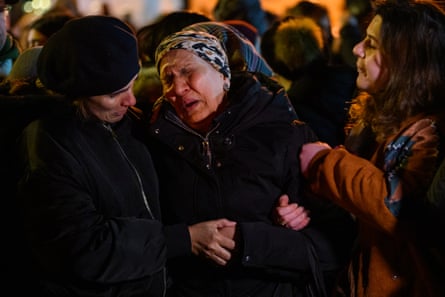
“Even when you were in trouble, you would say give, and that giving cost you your life,” his wife, Samadi, said in a tribute at his funeral. “You went upstairs to close the shelter and it took a heavy toll. I can’t digest it,” the ynet news site quoted her saying.
Katz was one of nine victims, four of them teenage children, killed in the deadliest attack Israel has sustained since it joined the US in attacking Iran on Saturday.
The Biton family lost three children, 13-year-old Sarah, 15-year-old Avigail and their brother Yaakov, 16, who are survived by their parents and one sibling. The other boy killed was 16-year-old Gabriel Baruch Revah, Israeli media reported.
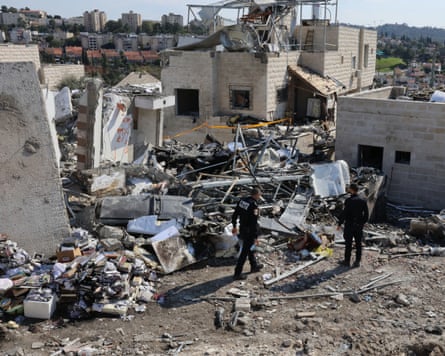
The force of the explosion entirely destroyed a synagogue that had stood over the shelter and left the thick, protective roof caved in. Astonishingly much of the structure withstood the force of the blast, despite its age and the intensity of the strike, said an officer who led the search and rescue mission.
“Even with the very severe impact that was here, and the price that was paid in this attack, the vast majority of people that were in the bomb shelter came out of it alive,” Lt Col Oded Revivi said at the site.
“In the bomb shelter there were over 30 people, two are dead, one is injured and 28 people came out alive,” said Revivi, adding that seven people were killed outside the shelter.
The toll matched the worst single attack of the 12-day war with Iran last June, when another missile hit an apartment block in Bat Yam near Tel Aviv. In addition to Katz and the four teenagers, two women were killed with their adult children: Sara Elimelech and her daughter Ronit, and Bruria Cohen with her son Yossi.
Revivi described arriving to a scene of horror, with survivors running from two huge blazes, cars burning around the missile site and a wide radius of wreckage spreading beyond the immediate impact site. Israeli authorities have a sophisticated early warning system that usually gives residents a few minutes to reach a shelter, if one is available.
There are no shelters in some areas of the country, particularly ones with large populations of Palestinian citizens of Israel. In other places the shelters are ageing, or not built to withstand a 21st-century missile.
The attack on Beit Shemesh, a sleepy hillside town about half an hour from Jerusalem, caused widespread fear. Nissim Edri, a 71-year-old community leader whose home is a block away from the missile impact site, lost childhood friends in Sunday’s strike.
When sirens blared the morning after the attack they disrupted some of the funerals, prompting mourners to throw themselves on the ground or cower behind walls. Edri started running to his local shelter, which was built at the same time as the one hit on Sunday, and looks almost identical, but froze on the stairs.
“I was afraid of going in, because my friends were killed in there yesterday,” he said. “[People] I’ve known since the days we came in to the world. We grew up together here.”
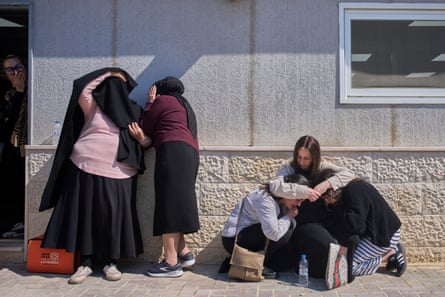
Revivi urged Israelis to use their shelters, despite the partial failure of the Beit Shemesh structure. “No shelter can provide 100% security 100% of the time,” he acknowledged. “This specific bomb shelter was built over 50 years ago, which means it is not modern standards, it is not the most protected surroundings that we have.”
David Azulai said his family was saved by a safe room built into their house, just two dozen metres from where the missile hit. “The explosion was huge, it shook our shelter, and when we came out this is what we found,” he said waving at a collapsed roof and shattered windows. His car was in flames across the road.
On Monday, packing up a few possessions, Azulai said he felt more grateful than afraid. “Thank God it was the house and the car, not us.”
The synagogue was not his usual place of worship, but he went there for some holidays and knew all the community. His two children are struggling a bit more, he admitted. “When they hear the sirens, they are afraid.”
Few in Beit Shemesh had expected their relatively obscure town to take a direct hit before Sunday, even as they followed government orders to take shelter. When it appeared on the national radar in recent years it was usually because of tensions caused by an influx of ultra-orthodox families, who have sometimes attempted to impose their own regulations on gender segregation and women’s dress codes on neighbours.
The only previous direct brush with Israel’s regional conflicts came during the Hamas-led attacks on 7 October 2023, when a rocket landed in an open area and some fragments of intercepted shrapnel fell in the town.
Neither caused injury or damage and Beit Shemesh escaped Israel’s war with Iran last summer untouched. Israel’s sophisticated multi-layer aerial defence system has destroyed most Iranian missiles and drones before they reach the country or intercepted them in flight.
But the caved in shelter on the edge of this hillside town is a terrible demonstration of the damage a single missile can do when it slips through that protective net, and the cost to Israeli civilians of the new war launched by their prime minister, Benjamin Netanyahu.