3 months ago
78
3 months ago
78
Dear reader, for the first time since I became a journalist, I have to tell you I wish you weren’t reading what I’ve written. Because if you’re reading this, it means I’m no longer in this world – or any other. I’ve died. Shit, it’s hard to write this, but that’s the way it is. I’ve died, and I don’t want to leave without saying goodbye and sharing a few final thoughts.
I’ve been a very fortunate person. I was fortunate to have been born in a European country that, although still under the yoke of Franco’s regime, very soon afterwards began to progress economically, socially and politically. Luck, and it was only luck, made my destiny infinitely easier than that of hundreds of millions of children who are born in regions of the world ravaged by hunger, poverty and war.
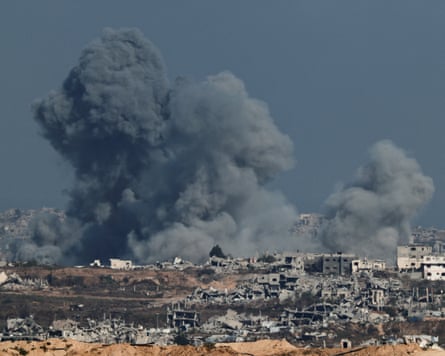
Even in this difficult moment I’m going through, I don’t think I have the right to complain or to moan about my lot. How can I play the victim knowing these historical inequalities and injustices? How can I lament my fate when we see what is happening even now, in Africa, Afghanistan, Ukraine, Yemen, Iran or in Palestine? I can’t say for sure, but I imagine that my last thought – the last image that passes through my mind before I shut down – will be of the children massacred in Gaza and of the surviving Palestinians who face a terrible future. What I do know is that I will leave this world without understanding why the international community chose to remain impassive while Israel perpetrated a genocide right before its eyes, broadcast live, minute by minute, massacre by massacre.
I decided to become a journalist because I truly believed that by reporting rigorously and honestly, we could improve this world. I still believe it now. I know that in my professional career I have made mistakes, I have put up with things (I hope only a few) that I should have rejected, and I have not, by any means, been a perfect journalist. Despite all that, I can look back and what I see doesn’t trouble me. I can say I have never, ever lied, manipulated, or concealed information. In all my reporting, whether from Madrid, Bilbao, Seville, Kabul, Jerusalem or Baghdad, I have tried to hold those in power to account, I have tried to relate what was happening, and I have tried to give a voice to those who lacked one. Voices for the victims; criticism for the perpetrators. No neutrality. No ambiguity. And that’s why I’m especially proud of not having risen as high as I could have. I was even fired for trying to remain true to my principles.
I learned, from veteran colleagues, what I consider to be the two principles of journalism. The first is that objectivity is not the same as neutrality. If there is an aggressor and a victim, a liar and an honest person, a corrupt individual and an honourable one, then your task is to describe all that clearly and forcefully. I’m sick of those who believe that being a journalist means reporting both sides’ versions, without filters, without challenging their veracity, especially – and this is worse and all too common – when you know that one side isn’t telling the truth.
The second principle is that to be a good journalist, it’s vital that you’re a good person.
I always add a third. Journalism is not just another profession. Society’s right to be well informed rests on our work. Freedom, equality and democracy depend on our work – albeit not exclusively. So there are no excuses for lying or concealing information. If we do, we should be held professionally, and even criminally, responsible.
I’ve been fortunate to have experienced politics from both the inside and the outside. If there’s something I’ve learned, it’s that no, not all politicians are the same. There are men and women who truly believe their mission is to improve the quality of life of all citizens, regardless of whether those citizens voted for them.
Obviously, there are also other politicians – far too many – who are driven by corruption and an insatiable thirst for power. We must fight against them, change countless things, and improve the entire system, but we must do so from within politics itself. We must do so because everything in life is politics or is conditioned by politics. So let us beware of those who attack politics, political parties, trade unions and democracy. The alternative to democracy is dictatorship, whatever the attractive euphemism some may use. The alternative to political parties and trade unions is a single-party system and a state-controlled union. There is much – so much – room for improvement, but the path is not the one the global far right is showing us.
I have been fortunate to dedicate the last stage of my professional life to researching and disseminating the recent history of Spain. Meeting survivors of Nazi and Francoist concentration camps, as well as their families, has been one of the greatest gifts that life has given me. The victims of nazism and other dictatorships never stopped repeating that fascism had not died, that it was still lurking, waiting for the moment to resurface. That is why it was, is and will be so important to be aware of history. Looking back is the best way to face the present, to avoid repeating mistakes and to be prepared for future threats. Looking back shows you that freedom, life and democracy are never guaranteed, and that we must fight every day to preserve them.
I’ll finish now. A young, much-loved person, who was aware that her end could come at any moment, told me: “Life is a privilege.” At the time, I didn’t appreciate her words. But, dear reader: savour life, be happy, value what truly matters, flee from toxicity and show empathy … lots of empathy.
I’d like to wrap up this article by saying that I’m going to be reunited with all the friends and family members I have lost over the years. I’d like to say it, but I don’t believe in any god. As I write these last lines, I am aware that all I have ahead of me is a fade to black. A fade to black that, paradoxically, is what gives meaning to our existence.
I wish you all the best and hope you enjoy yourselves because, yes, life is a huge privilege.
-
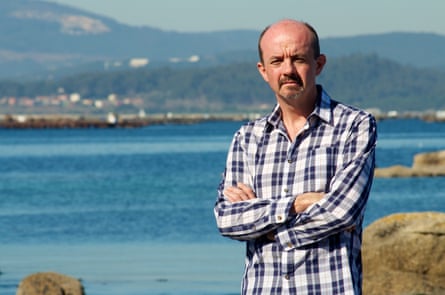
This article is an edited version of a posthumous column written by the Spanish journalist and writer Carlos Hernández de Miguel and originally published in elDiario.es. Hernández, who was 56, covered conflicts in Kosovo, Palestine, Afghanistan and Iraq. He also worked as a political communications adviser and, more recently, spent years researching aspects of the Franco dictatorship and contributing to elDiario.es. His books include The Last Spaniards of Mauthausen and Franco’s Concentration Camps: Subjugation, Torture and Death behind the Wire Fences