3 months ago
77
3 months ago
77
I first met Nana five years ago. The Ghanaian writer had just published The Sex Lives of African Women, a book I still think about often for how surprising and eye-opening its accounts of contemporary, quietly radical sexual practices in parts of the continent are.
She is back with Seeking Sexual Freedom: African Rites, Rituals and Sankofa in the Bedroom. When I spoke to her, I found a writer in transition who is still as surprising.
Unearthing sexual customs and rediscovering rites of passage
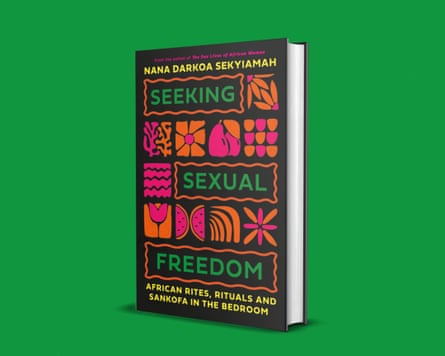
Reading and speaking to Nana is like being in the presence of a sex scientist. Seeking Sexual Freedom is about rediscovering the rites of passage across African cultures that Nana believes can build “new models of sexual freedom.” In the book, she asks: “Are our Indigenous religions more expansive than the Abrahamic faiths we predominantly practise today? Can we go back to the best of our traditional practices, and use that knowledge as a foundation?”
I had no idea what she could possibly mean. Rites of passage in the parts of north Africa I grew up in consisted broadly of shutting the hell up and making kids figure it out for themselves. But Nana, as is her strength, spent years speaking with women across the continent and the diaspora to unearth the customs that have either been forgotten or simply not talked about enough.
Be warned, this is about to get explicit.
Rites and rituals
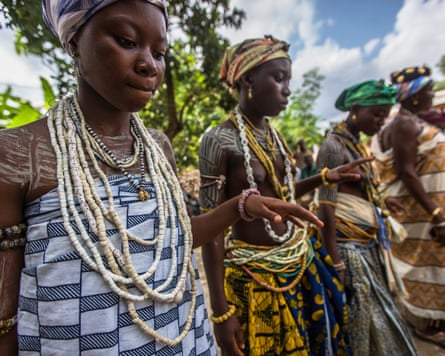
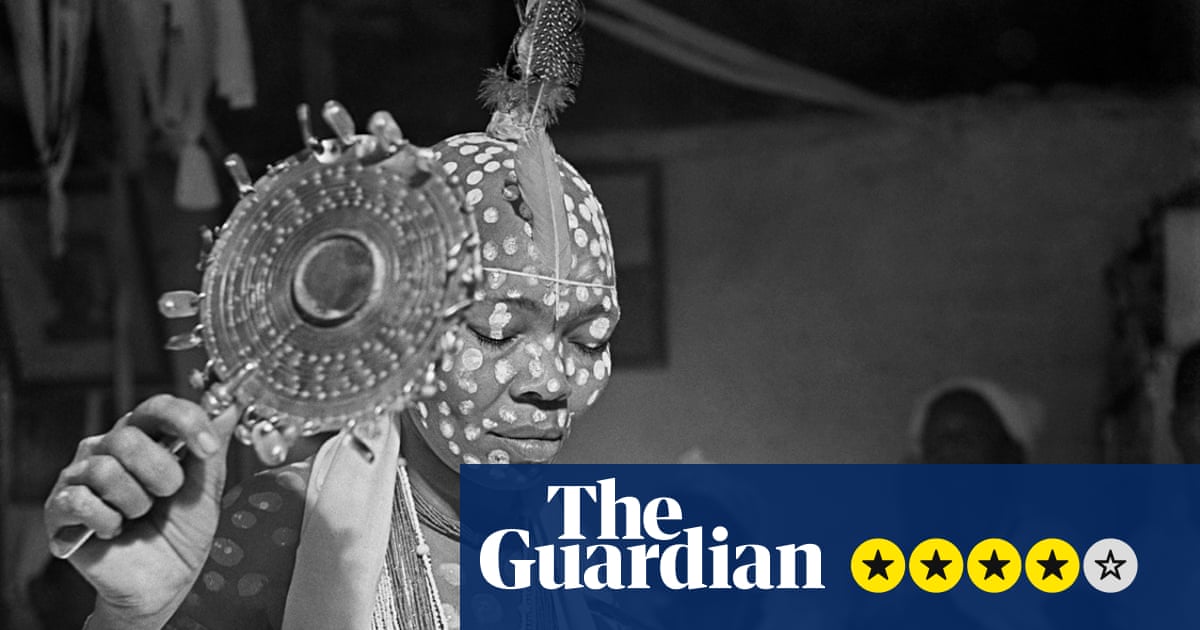
Nana describes the Ghanaian tradition of “Dipo” – rites that usher young girls into womanhood with puberty. In the book, Nana writes that on getting her first period, her mother gave her a special dish of yams and a brief talk about “not playing with boys” now, in case she falls pregnant. But a couple of hours from Accra, she observed the elaborate process of Dipo: girls are dressed in beads, their heads shaved, with only the bottom half of their bodies covered. There is also training involved, lessons on washing and hygiene, as well as symbolic performances of virginity.
“It occurred to me that, oh, people don’t know that these stories exist and they’ve been written about mainly by feminist academics,” Nana told me. “I started to think about returning to the past, taking what’s good from the past and bringing it into your present and into your future. What was good about those rites and rituals?” She writes that the “pernicious aspect of traditional puberty rites is the focus on the girls” so-called “purity”. But she also meets women who tell her that they learned a lot from simply spending time with other girls. “What if,” Nana said, “we were to tell them about their bodies and pleasure for their own sake?”
Sex aunties
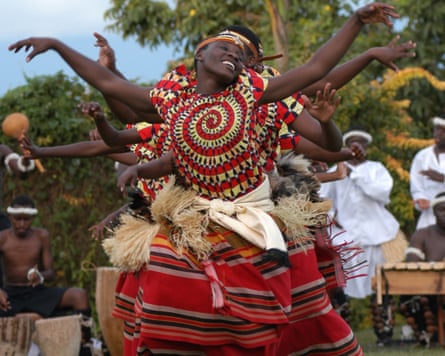
“Everybody has that one cool auntie they have a great relationship with,” Nana says, but in Uganda, she found a model of cool auntie that is entrusted with the “explicit role” of teaching you about sex and preparing you for womanhood. Here, she is talking about the “ssenga” and the role she plays among the Baganda people of Uganda. In this community, the ssenga is the one who is tasked with preparing her niece for sex in the future. “I really love the idea of a sex auntie,” Nana said, “because a lot of us grew up in the diaspora with mothers who are very conservative and say very little, if anything, about sex. Just imagine, if everyone had a sex auntie. Someone who is bold, who is courageous.” She references a character from her book who got up and left the room when a kissing scene began to unfold, and was called back by her auntie, who told her not to be ashamed and then asked, “If that makes you feel anything, let’s talk about it.”
Nana continued: “If parents are too challenged to talk to children about sex and their bodies and pleasure, why don’t you appoint someone who you trust?” She is already playing that role for her goddaughter, and as she talked to me about the books she gives her and questions she fields, I realised that this is a quietly radical and loving task that will save a monumental amount of heartache and confusion for her honorary niece.
Bodies and pleasure
One of the practices Nana writes about is that of “pulling”, where young Baganda girls are encouraged to pull on their labia in order to extend them to a fuller length, believed to be more pleasing to men during sex. Ssengas starts the pulling, but then girls and their friends in school do it to each other and themselves. “I had read about the ssengas and pulling,” Nana said, but it was only when she met a woman who had been pulled that she understood the full scale of the practice, which involved hours of pulling, herbs to inflame the labia, and demonstrations in girls’ schools under the auspices of teachers. “It was mind-blowing to me, it was from her that I actually got the detail beyond the academic stuff.”
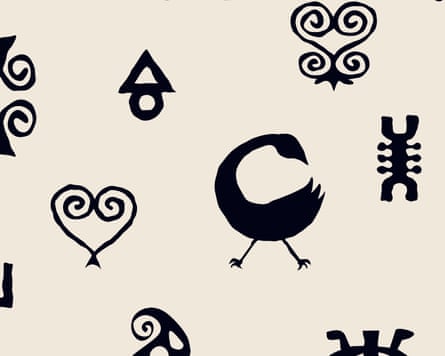
What is constantly amazing to Nana is the diversity of African cultures, she said. “When it comes to Africa and girls’ genitalia, people automatically think FGM [female genital mutilation], she told me. “For me, it was really radical to bring in this story where these girls are being taught to, yes, acculturate their genitalia to what is considered ideal for Baganda women. But what it’s doing is teaching them familiarity with their genitalia, encouraging them to touch each other’s genitalia. How many of us, even now, know what our own genitalia look like? We don’t ever look.” Even girls who do not pull, offer to pull for others out of curiosity. This is where the Ghanian Twi concept of “Sankofa” in the book title comes in, one Nana introduces in the book as the work of revisiting the past to retrieve the good in our history, directly translated as: Go back and fetch.
Nana has gone from chronicling the contemporary sex lives of African women in blogs and books to expanding into the past, into the pre-Abrahamic and pre-modern, and finding in there not just the primitive or passe, but the sexual openness that was lost to modernity, religion and urbanisation. It is work she pursues with a forensic focus, but it is grounded in love and care for girls and women, in a keenness that they should not be robbed of the rights of joy and pleasure in their bodies. Her book is full of examples of women who have bloomed into a healthy relationship with their sexuality and biology, all ushered there by older female gurus and introductions to their bodies at a young age.
“I just want to provide an opportunity to do things differently,” Nana told me. “We are not starting from nowhere – we are starting from a base.”
-
Seeking Sexual Freedom: African Rites, Rituals and Sankofa in the Bedroom, by Nana Darkoa Sekyiamah, is published in the UK by Dialogue Books on 12 March and in the US by Atria Books on 5 March