
-
The US-Israel war on Iran has entered a sixth day, with US forces reportedly ready to provide air support to Kurdish fighters if they enter the conflict. Kurdish officials told the Associated Press that Kurdish Iranian dissident groups based in northern Iraq were preparing for a potential cross-border military operation in Iran, and the US has asked Iraqi Kurds to support them. Intense waves of airstrikes have hit dozens of military positions, frontier posts and police stations along northern parts of Iran’s border with Iraq in what appears to be preparation by US and Israel for a new front in their war.
-
Experts predicted that backing armed groups from Iran’s ethnic communities would “open up a hornet’s nest”, aggravating divisions within the diverse country and increasing the risk of a chaotic civil war if the current regime collapses.
-
Mojtaba Khamenei, the second son of the assassinated Ali Khamenei, is being heavily tipped to succeed his father as supreme leader of Iran, which would pitch a hardliner into the task of steering the Islamic republic through the most turbulent period in its 48-year history and offer a powerful signal that, for now, it has no intention of changing course.
-
A torpedo fired by a US submarine sank an Iranian warship off the south coast of Sri Lanka. At least 87 Iranian sailors were killed in the attack on the Iris Dena on Wednesday. The frigate was sailing in international waters as it returned from a naval exercise organised by India in the Bay of Bengal. The torpedo strike prompted questions from former US officials about whether Washington’s aim of eliminating all of Iran’s military breached international law.
-
Iran launched missiles at Israel early Thursday. Air sirens sounded in Tel Aviv and Jerusalem shortly after the Israeli military said it had begun new strikes in Lebanon targeting the Iranian-backed Hezbollah militant group in Beirut’s southern suburbs.
-
Air traffic appeared to be picking up slightly, even as travel across the region remained heavily disrupted by the widening Iran war. Governments around the world are rushing to organise the return of their citizens from the Middle East. Officials have chartered jets or deployed military aircraft, routing stranded travellers through Oman, Egypt and Saudi Arabia – key exit points where planes could land and take off.
-
Top US military officials told lawmakers in a closed door briefing on Tuesday that they may not be able to shoot down every Iranian drone being launched against military installations and assets, according to two people familiar with the matter. The officials, led by the chair of the joint chiefs of staff, Gen Dan Caine, said Iran has been deploying thousands of one-way attack drones and that they have capacity to take down the vast majority but not all of the barrage.
-
Senate Republicans voted down a war powers resolution that would have forced Donald Trump to receive Congress’s permission before continuing the war with Iran. Republicans batted aside concerns from Democrats that the campaign is illegal and risks plunging the United States into a prolonged conflict. The measure would have forced an end to the US air and naval campaign against Iran and require the president to go to Congress before re-entering the war.
-
The White House pushed back against questions on US involvement in the bombing of an Iranian girls’ school which killed 175 people. The press secretary, Karoline Leavitt, did not accept US responsibility for the attack, and noted that the Pentagon is investigating the strike. Defense secretary, Pete Hegseth, said the US was investigating it.
-
Hegseth also signaled a possible longer time frame for the conflict than has previously been floated by the administration, saying it could last eight weeks but that the US has the munitions and the equipment to beat Iran in a war of attrition. He declined to set a specific time range, saying the specific duration of the war would depend on how it unfolds. More forces are arriving in the region, including jet fighters and bombers, Hegseth said, and the US “will take all the time we need to make sure that we succeed.”
-
The impact of the Iran conflict on energy markets will be temporary and a “small price” to pay for US military goals, US energy secretary, Chris Wright, told Fox News. US and Israeli strikes on Iran and the subsequent response by Tehran have widened regional tensions and paralysed shipping through the strait of Hormuz, disrupting vital Middle East oil and gas flows and sending energy prices higher. Donald Trump has pledged to provide insurance and naval escorts for ships exporting energy from the region to contain soaring costs.
Iran war briefing: US reportedly ready to provide support to Kurdish fighters if they enter conflict
 2 months ago
63
2 months ago
63
Related




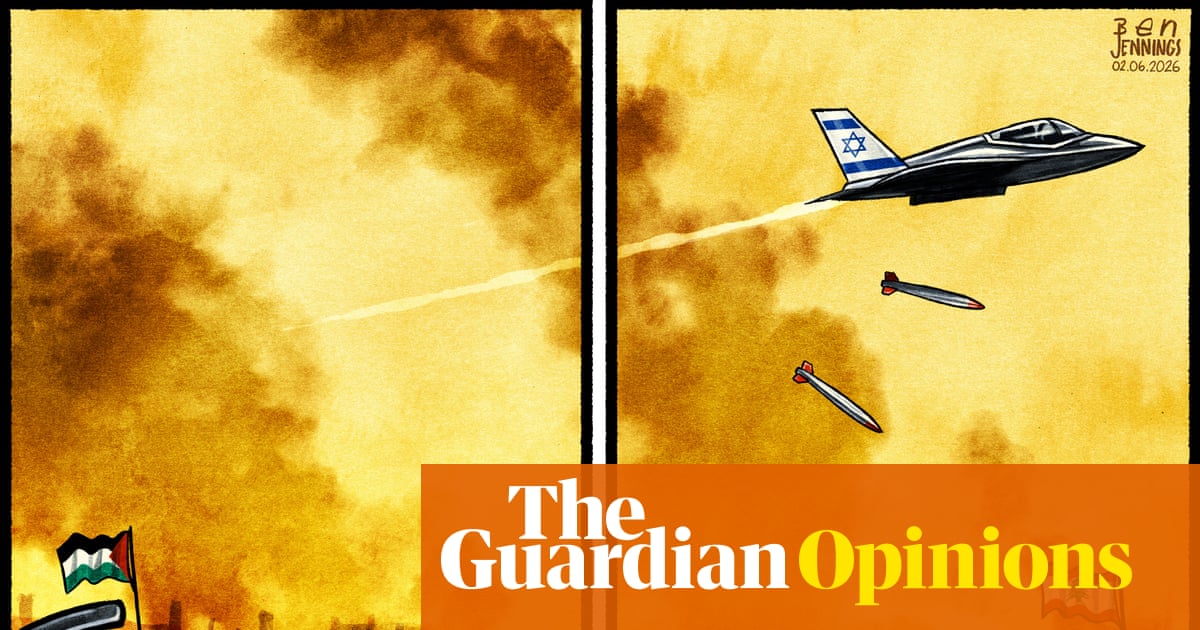
Ben Jennings on Israel’s strikes on Lebanon – cartoon
3 hours ago
5



Curaçao World Cup 2026 team guide
5 hours ago
10









|

| |

|

| |

|

| |

|

|
|

|

|
Popular

US senator says he was pepper sprayed by federal agents duri...
6 days ago
7171

The Taylor Swift effect: US vinyl sales top $1bn for the fir...
2 months ago
1843

Middle East crisis live: Trump says Iran being ‘decimated’ a...
2 months ago
666

US military is not preparing for Cuba takeover, top general ...
2 months ago
518

John Oliver on JD Vance: ‘He’s become the archetype of the h...
2 months ago
518

Tape shows Bolsonaro son asking jailed banker for $26.8m to ...
2 weeks ago
485

US-based internet suicide forum implicated in 160 UK deaths ...
2 weeks ago
451

Democrat and Trump-endorsed Republican head to Georgia runof...
2 months ago
440

Ben Jennings on Jim Ratcliffe’s ‘colonisation’ comments – ca...
3 months ago
334
Rumah Pilot Korban Penembakan Smart Air Mulai Didatangi Pela...
3 months ago
331

Prabowo soal Kasus Keracunan MBG: Itu 0,0006 Persen
3 months ago
326

Muhammadiyah Tetapkan 1 Ramadan 18 Februari, Bagaimana Pemer...
3 months ago
319

Colorado governor commutes sentence of election denier Tina ...
2 weeks ago
288

Southampton charged with misconduct by EFL in Middlesbrough ...
3 weeks ago
247

Six Nations 2026 predictions: our writers on who will win an...
3 months ago
225

Teen mariachi trio detained by ICE to open for Kacey Musgrav...
1 month ago
216

Trump and his oil-and-coal oligarchy should face sanctions f...
3 weeks ago
202

‘You can cry or fight’: Igor Tudor orders struggling Spurs t...
2 months ago
194

Totally grounded? How the jet fuel crisis could change our h...
3 weeks ago
189

Pussy Riot protest at Venice Biennale forces Russian pavilio...
3 weeks ago
174
|
|
| |
|
|
| |
|
|
| |
|
|
|
|
|
|
|