3 months ago
87
3 months ago
87
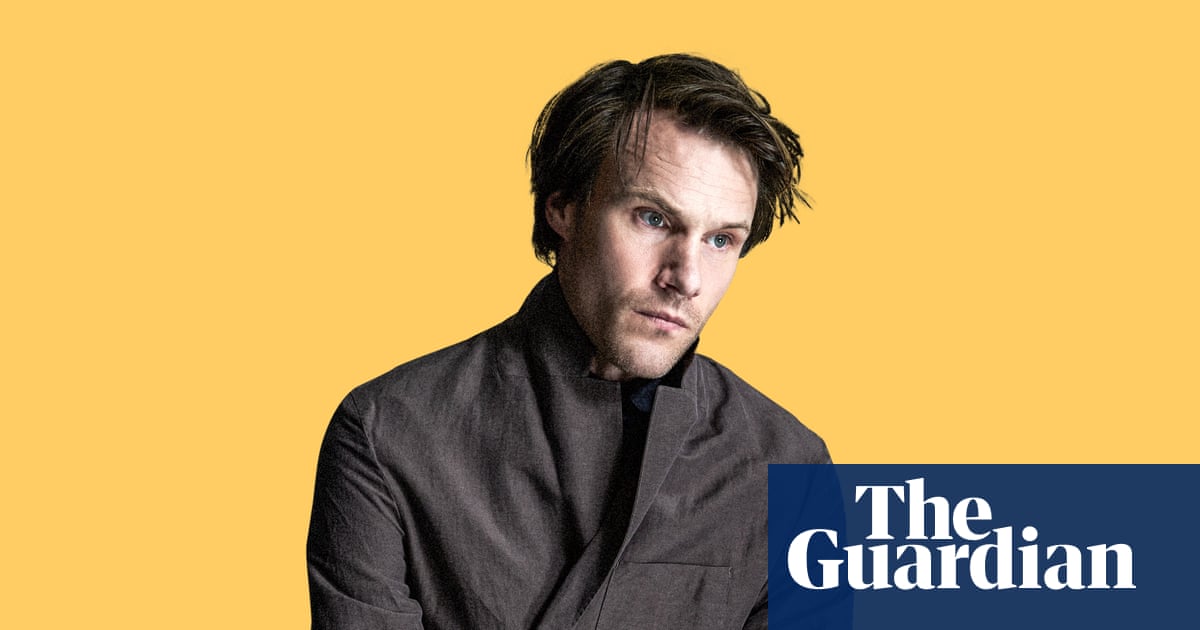
For a quiet man, Ralph Towner, the American multi-instrumentalist and composer, who has died aged 85, had an impressive penchant for sharp epithets about his own creative motives.
Describing himself as a “raconteur of the abstract” was a memorable one. So was his remark in 2023, to Premier Guitar magazine, that throughout his career he felt he had generally been “more obsessive than I’ve been curious”.
Towner nurtured an unmistakable lyricism on a guitar, and his obsessiveness enabled him to tap into an imagination that kept coming up with hauntingly lyrical melodies, and revealing where their shapes might lead his improvising.
His confidence in that inner world brought a remarkable catalogue of achievements. He played New York jazz clubs as an accomplished pianist in the late 1960s, but also played the Woodstock festival on guitar with the folk-blues singer-songwriter Tim Hardin in the same period. He performed and wrote for the saxophonist Paul Winter’s folk/jazz/classical band the Winter Consort, unexpectedly finding two of his compositions for the band – Icarus and Ghost Beads – becoming the names of craters on the moon, after the Apollo 15 moon-landing crew took Winter’s 1970 album Road with them on the trip.
On a 12-string acoustic guitar, Towner freely improvised an opening for Wayne Shorter’s The Moors, on Weather Report’s 1972 album I Sing the Body Electric, thereby creating a historic moment in the breakout of 60s/70s jazz-rock fusion.
Through his brief association with the Winter Consort, Towner and three musical soulmates from that group (the bassist Glen Moore, the reeds player Paul McCandless, and the sitarist and percussionist Collin Walcott) contributed to another landmark moment in contemporary music-making. With the formation of the popular quartet Oregon, they created a hybrid of jazz, folk, classical, Asian and Latin-American music, brought together with a spacious patience, that came to be described as chamber-jazz.
As a leader of his own projects, in 1973 Towner also began to collaborate with the producer Manfred Eicher, founder of ECM Records. He led more than two dozen releases of solo and small-group projects for ECM under his own name – including partnerships with Jan Garbarek, the trumpeter/composer Kenny Wheeler, the drummers Jack DeJohnette and Peter Erskine, and the vibraphonist Gary Burton. His tunes were so expressive that classy singer-songwriters would compose lyrics for them, notably the subtle British vocalist Norma Winstone.
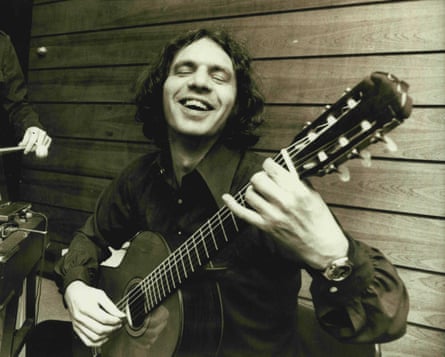
His last ECM release was the exquisite 2023 solo guitar album At First Light, a rich mix of the personal and the interpreted, even including Danny Boy, one of his favourite melodies.
The youngest of five siblings, Towner was born in the city of Chehalis in south-west Washington state. His father, Milo, a timber-mill worker, played the trumpet, and his mother, Bernice (nee Caverly), was a church organist and a piano teacher. Milo died in the second world war when Ralph was three, and the boy learned the piano with his mother. He showed an early aptitude for improvisation in school, and was allowed to jam on penny whistles and other instruments with school ensembles because his ear for a spontaneous countermelody was so reliable.
When the family moved south to the city of Bend, Oregon, Ralph took up the trumpet, and played in local jazz and polka bands. Music preoccupied him throughout his teens, and he studied classical piano and composition at the University of Oregon, enrolling in 1958.
Two encounters in his college years would shape Towner’s life. The first was that he began jamming with Moore, a fellow student and self-taught double-bassist. The second was hearing another student playing an instrument he had never considered before – a classical acoustic guitar. Towner was so astonished by the instrument’s sonorities that, on the recommendation of one of his teachers, he sought out Karl Scheit, a classical guitar and lute master at the Vienna Academy of Music.
Studying with Scheit meant relocating to Austria, living alone in a shoebox room and practising and studying seven days a week. Scheit usually taught his students Haydn, Vivaldi, Dowland or Bach, but by the time the young Towner returned to the US, he had a flexible contrapuntal technique that would also allow him to draw inspiration from the piano and basslines of the Bill Evans piano trio or a Brazilian samba group, adding percussion parts by intermittently drumming on the guitar’s body.
When Towner and Moore joined Winter Consort in 1971, they met McCandless and Walcott, skilled musicians with quirky leanings similar to their own. The four quickly formed Oregon, thus named because of Towner’s and Moore’s affection for the landscape of the state where they were raised. It was a dream lineup for a contemporary genre-bending group in a musical era opening up to non-western cultures, and the proof was apparent in its worldwide success.
With albums such as Music of Another Present Era (1973), Oregon in Concert (1975) and Northwest Passage (1997, with a changed lineup following Walcott’s death in 1984 in a tour bus crash), the band sustained on record and on tour their capacity for cinematic atmospherics, abstract yet melodic collective improv, and variously brooding and coolly funky grooves. Their 30th and final album was Lantern (2017) – with a typically widely travelled repertoire taking in classic originals including The Glide and Duende, alongside Brazilian, Egyptian, Scottish and flamenco references.
The 1973 solo album Diary remains a standout in Towner’s catalogue. Solstice (1977) was a memorable transfer of an Oregon sensibility to an A-list European lineup featuring Garbarek, the bassist Eberhard Weber, and the drummer Jon Christensen.
Towner’s duo with the bassist Gary Peacock, Oracle (1994), is an object lesson in finely detailed collaboration, while Ana (1997) and Anthem (2001) are virtuoso solo guitar showcases, the latter featuring a delectable version of Charles Mingus’s classic Lester Young tribute, Goodbye Pork Pie Hat.
Towner married the Italian actor Mariella Lo Sardo in 1994, and moved first to Palermo in Sicily and then to Rome. Productive new musical connections inevitably followed, notably with the Sardinian trumpeter Paolo Fresu.
He is survived by Mariella, and by a daughter, Celeste, from his first marriage, to Janet, which ended in divorce.