2 months ago
90
2 months ago
90
‘Many people, including myself, spend a lot of time thinking about the past. And if you’re living in the same house you were living in with a spouse, the spouse is all around. Nonetheless, it’s not healthy to live in the past; I think we all know that.” Joyce Carol Oates is speaking to me from a book-lined room – one that makes you finally understand what “den” means – at her home in Princeton, New Jersey. She teaches at Princeton University as well as teaching advanced creative writing at Rutgers, also in New Jersey.
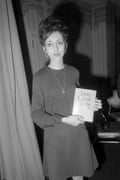
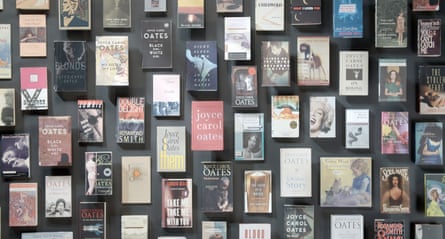
The author turned 88 this month, but she looks little changed from the 1960s, when she came to prominence: weightless like a sprite, focused and serious like a librarian. She has been a prolific writer, with more than 60 novels and many volumes of short stories to her name, earning her five Pulitzer prize nominations and a National Book award, among others, since the start of her career. Blonde, a haunting, fictionalised account of the life of Marilyn Monroe, Them, part of the Wonderland quartet, and Zombie, loosely based on the serial killer Jeffrey Dahmer, are often name-checked as career highs, but her consistency is striking. When she wanted to write mysteries, she did so under the pseudonyms Rosamond Smith and Lauren Kelly. Her works of nonfiction, mainly criticism and memoir, would constitute a career on their own.
She wastes no time between what she thinks and what she says, yet it takes me about a week to understand the conversation – specifically, what was so unusual about it. Her statements are spare and clear, some are obvious, but they work almost as camouflage, to slip in deeply idiosyncratic ways of thinking and being. She will not be drawn into territory that doesn’t interest her, but sometimes she arrives via her solitary route at a subject everyone else is talking about and drops in an observation so clear, unembellished yet unhurried, that the rest of the chatter falls away.
That is what happened last November when she got into what Forbes magazine described as a “fierce online feud” with Elon Musk, “roasting him on his own platform [X]”, according to one literary magazine, with the tweet: “So curious that such a wealthy man never posts anything that indicates that he enjoys or is even aware of what virtually everyone appreciates – scenes from nature, pet dog or cat, praise for a movie, music, a book (but doubt that he reads); pride in a friend’s or relative’s accomplishment; condolences for someone who has died; pleasure in sports, acclaim for a favorite team; references to history. In fact he seems totally uneducated, uncultured. The poorest persons on Twitter may have access to more beauty & meaning in life than the ‘most wealthy person in the world.’”
Musk, a man impervious to the opinions of others, almost seeming to delight in disapprobation, couldn’t handle something so indisputable. (His conniptions aren’t relevant here, except in so far as to say he had them.) Maybe what he minded was the idea that anyone else could be richer than him, even spiritually.
Oates’s new collection of short stories is The Frenzy, split into three parts, which, she says, “begins with people who are isolated from one another – girls becoming young adults, making their way. The second section is adults having their difficulties. Then it ends with two women really discovering the emotional impact of friendship. Two widows. I have a number of widowed friends and I have widower friends. It’s definitely so significant, so emotionally rich, and much of that richness is sharing the experience of loss. That’s probably what knits us together.”
In fact, that experience of bereavement is told through different lenses and different relationships throughout the book – bitter agony in one story, florid, hallucinatory grief in another. Even a character grieving a life not lived has a very widowed, which is to say “left behind”, flavour.
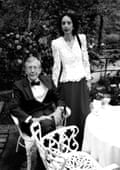
Oates was married for 48 years to Raymond J Smith, who edited the literary journal Ontario Review, which the couple co-founded in 1974. His sudden death in 2008, as a result of pneumonia, destroyed her. A Widow’s Story, her memoir of the aftermath, published in 2011, describes the loss in intricate detail – she loses not just her husband, but herself as a wife, as a writer, as everything. Seven months later, she met Charles Gross, a psychology professor at Princeton; they married in 2009. A decade on, he died. The practical details of that loss populate The Return, one of the short stories in The Frenzy.
But first, those young girls making their way. Strikingly, in each case, the interior voice of a young person, sometimes younger than 10, rings out – as if, for Oates, childhood was yesterday. “I remember it very well,” she says. “I have a natural affinity or identification with adolescent girls, and even adolescent boys, to an extent.” The condition of the artist and that of the teenager are analogous, she says. “They’re astute at seeing the inaccuracy and dishonesty, the compromises that adults make without thinking or being aware.”
She cites Nietzsche: “He spoke of the herd personality.” Then talks of Van Gogh: “You can see how alone he felt and how impassioned his brushwork was. There is no way that somebody like that would just fit in in a crowd.” It sounds as if she is saying that, for an artist, identity and alienation are inseparable, which would connote despair, at least as an element. “No, Nietzsche was filled with great enthusiasm, very optimistic about the future of humankind,” while Van Gogh’s tribulations were probably “biochemical”, she says, before conceding: “I think many writers, artists, poets are permanently in love; they yearn and they love. But the world doesn’t always reciprocate.”
While Oates describes the spine of this collection in neutral, even saccharine, terms – stages of the human life cycle, the power of friendship, wordless communication – most of the stories march to the drumbeat of male control and violence. She would hate that as a thematic description, such a coarse generalisation, so basic – and, indeed, she bats away the idea with a shake of the head. She is equally interested in female deficiencies, specifically maternal ones. “If your mother doesn’t protect you, you’re exposed,” she says. “Two close friends are both women whose mothers really failed them, just didn’t provide them with the protection and love they needed. I had a wonderful mother. My own mother was so, so loving.”
The question hanging, though, is what your mother should be there to protect you from; so many of the inflection points in the heroines’ young lives are determined by predatory acts. That has been true since Oates’s stunning 1966 short story Where Are You Going, Where Have You Been?, based on the serial killer Charles Schmid, which was dedicated to Bob Dylan because she said the story was influenced by his song It’s All Over Now, Baby Blue.
It would be flattening to say that rape and murder are the definitive life events around which her work circles – she has been taking inspiration from real and imagined worlds since her first literary love, Lewis Carroll, from whom she absorbed “this philosophical, very sceptical and playful consciousness”, seeded in 1967’s A Garden of Earthly Delights, the first in the Wonderland quartet. The violence of these celebrated novels is not only sexual; it is racial, social, subtle and literal.
“My writing isn’t usually explicitly violent,” she wrote in 1981 in a coldly furious essay entitled Why is Your Writing So Violent?, “but deals, most of the time, with the phenomenon of violence and its aftermath.” She finds the question itself sexist (and ignorant and insulting), because it betrays an infantilising idea that happiness is the default state expected of women, and doubly sexist when readers try to trace it back to violent events in her own family. Her paternal great-grandfather tried to kill his wife, then killed himself, while her grandmother, Blanche, was close by; Oates’s maternal grandfather was murdered. But the question answers itself: violence and its aftermath are everywhere. It is almost more interesting to ask why those authors who never touch on it feel the need to shelter us.
Yet there is something more specific in this new collection, distilled in one relationship where the husband always tries to avoid scenes with his wife, and, indeed, all female-male altercations, as Oates writes, “for essentially, it is the female perceiving the male as he is, and the male hoping to convince her that she is mistaken”. Or, if I can put that more bluntly, all the men are awful: the violent ones convince themselves they are not; the predators convince society they are generous; and the men who aren’t violent are tyrannical, loveless or absent. One scene, in which nothing more physical than hiking occurs, is so finely drawn and so oppressive that it leaves the reader, and indeed the male protagonist, with a deep petrification, an aversion to patriarchal control.
To be more literal-minded still, Oates must be finding her country’s strongman politics appalling, I say. Well, she responds, she came of age when the US was bitterly divided over Vietnam. “It’s almost exactly the same thing,” she says. The generations were utterly at odds and, until Trump came along, Nixon was the avatar of a “dishonest, conniving, criminally adjacent” president. Trump is worse, she concedes, insofar as he doesn’t seem to be afraid of the law and has made much more money out of his position.
What does she think about the modern condition? Of AI, she says: “A whole generation of young people – they can’t get jobs, they send as many as 1,000 letters of inquiry, they get AI rejections, sometimes they’re interviewed by AI. This is killing these young people.” Of living in a country “dominated by extreme wealth”, she says: “‘Wealthy’ is not a strong enough word to convey how much money these people have.” She has concerns about the millions they pour into politics to further their own ends. But she sets all this aside from her work, in which, she says, she is like most writers – “interested in people, in dramatic situations with other people”.
When she arrived at Syracuse University in 1956, “it was before the women’s movement in the United States. There wasn’t any articulated feminist organisation. So, when I was hoping to be a writer, I was in an arena whose mainstream was all male. Literature was all male. I studied philosophy at Syracuse and one of my professors told me that there was not much point in majoring in it because it was literally all men.”
Nonetheless, when the women’s movement did get going, she wasn’t at its centre: “I was friendly with activists, but that’s a whole different life, to be like Betty Friedan, Gloria Steinem – you’re going out, you’re organising, you’re finding money. I was always a writer and a very introverted person. I’m not really interested in that sort of propaganda writing. I’m happy to show women imperfect. I’m not out to be critical of men; I’m perfectly capable of having a male protagonist.”
Characteristically, Oates’s stance is at once incredibly simple and deeply complicated: the notion of the writer as outside the slipstream, observing civic life and its turbulence from, by preference, a considerable distance, is baked into her idea of herself. Yet her refusal to generalise – every aftermath, every victim is different, because every victim is still a person – almost brings politics back to its core purpose. Because if the point of it all isn’t the uniqueness, the preciousness, of every perspective, then it’s not really politics; it’s just a bunch of thugs telling you what to do.
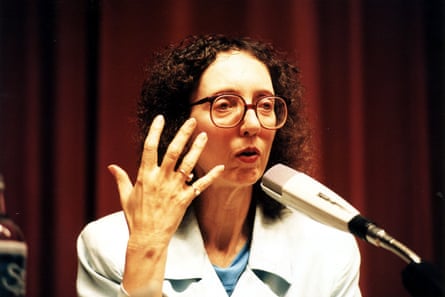
Photograph: Ullstein Bild/Getty Images
Later, still loth to generalise, she says that plenty of writers and artists are political, naming Norman Mailer, Allen Ginsberg and Bob Dylan. “But I’m not really like that,” she says. “I’m not really a proud person.” I don’t catch the word proud and have to ask her to repeat it; she does so twice, still quietly, like an echo from a myth, reminding you that pride isn’t a great idea.
The Bicycle Accident, the third story in The Frenzy, was published in the New Yorker to a huge response. It recalls an accident Oates had when she was 12. “I didn’t fall quite as hard as [the character] does,” she says, as if it is pure coincidence that she and her own creation had similar mishaps. “But I do remember the physical trauma and how I limped home. And I was bleeding and my clothes were torn, my skin was torn. When I was writing this story, it all came back, that visceral feeling of helplessness. And I thought: how would it be a story? It would be a story if the girl had that accident when she was fleeing. Fleeing from some disappointment of adults.”
It could serve as our collective noun, a disappointment of adults, and serve as her life’s work: trying to stay away from it, the better to describe it.