3 months ago
91
3 months ago
91
Donald Trump and his top advisers have refused to rule out the potential for open conflict with Venezuela as Nicolás Maduro urged his navy to escort oil tankers defying the largest US fleet deployed in the region in decades.
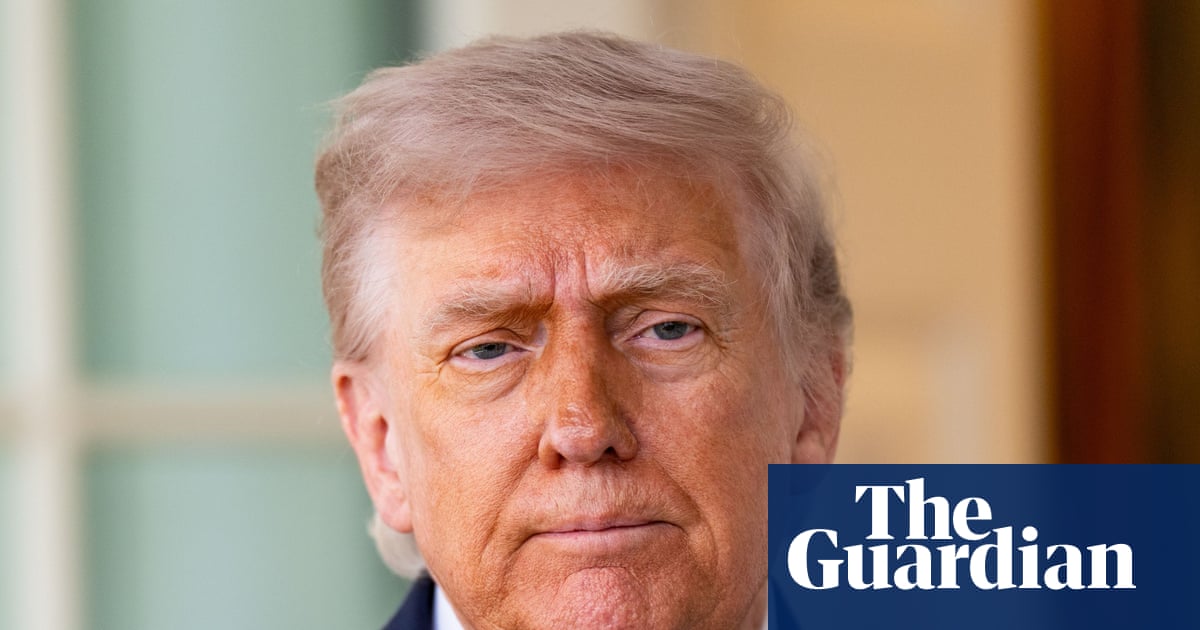
In an interview broadcast on Friday morning, Donald Trump told NBC News that going to war with Maduro’s regime remains on the table. “I don’t rule it out, no,” he said in a phone interview with the network.
And at a year-end press conference at the state department, Marco Rubio doubled down on remarks by other top Trump advisers that the US could coerce Maduro through its campaign of strikes on alleged drug boats travelling toward the United States.
“We reserve the right, and have the right, to utilise every element of national power to defend the national interest of the United States,” said Rubio. “And no one can dispute that. Every country in the world reserves the same option. We just simply have more power than some of them.”
The recent seizure of a sanctioned oil tanker off the coast of Venezuela has led to a full-scale upheaval in the “dark fleet” that ferried oil from the heavily sanctioned country, according to industry data shared with the Guardian, in a move that experts have said will cut significant revenues to Maduro’s government.
Of more than 30 sanctioned tankers that operate in Venezuelan waters, many are now sheltering in the Indian Ocean in order to avoid interdiction. An analysis of their tracking data provided by Windward AI, a maritime data company, “reveals a significant shift in maritime activity, with vessels rerouting to the Indian Ocean to evade US naval forces”.
Of 59 “high-risk vessels”, however, “many are trapped in the blockade zone or engaging in location manipulation,” the report said.
Asked at a news conference on Friday whether the United States was planning regime change, Rubio said: “It is clear that the current status quo with the Venezuelan regime is intolerable for the United States,” he said. “So, yes, our goal is to change that dynamic.”
Experts say that blockade makes a direct US attempt to unseat Maduro more likely as the Venezuelan regime is slowly starved of oil revenues from sales to China.
“The blockade of these sanctioned vessels provides an additional source of leverage for the United States,” said Jason Marczak, vice-president and senior director at the Atlantic Council’s Adrienne Arsht Latin America Center, in a recent analysis.
“By cutting off a significant part of the regime’s income, the United States gains an additional chip to put on the table in discussions on ending Maduro’s dictatorship in Venezuela. This move elevates the Caribbean campaign from a counter-drug operation to one that is also cutting off the financial lifelines to Maduro, who the United States has designated as the leader of [putative drug trafficking organisation] the Cartel de los Soles.”
Trump refused to say whether ousting Maduro was the ultimate goal in his military offensive, which has been escalating for four months, with about 15,000 troops positioned at Venezuela’s doorstep and attacks on vessels that have already killed more than 100 people in the Caribbean and the Pacific.
But Susie Wiles, his chief of staff, said in an interview published in Vanity Fair this week that Trump “wants to keep on blowing boats up until Maduro cries uncle”, undermining the administration’s claims that law enforcement was the key goal of the US military buildup.
During his news conference, Rubio confirmed that the US was trying to put pressure on Maduro through the campaign of strikes against boats that the US has said were carrying drugs.
“He knows exactly what I want … He knows better than anybody,” said Trump, who added that there would be additional seizures of oil tankers, such as the Skipper last week, which was carrying about 2m barrels of heavy Venezuelan crude and was reportedly bound for China.
Maduro called the seizure an act of “piracy”, and his regime, without providing details, this week accused the government of Trinidad and Tobago of taking part in it, on the same day the Caribbean country announced it would allow the US military access to its airports in the coming weeks following the recent installation of a radar system.
Inside the White House, several top Trump aides have enthusiastically thrown their support behind more direct action in Venezuela. They include his deputy chief of staff, Stephen Miller, who the Washington Post reported had initially pushed for an anti-drug campaign in Mexico before backing the Venezuela strikes, as well as Rubio, whose parents are Cuban immigrants, and has been a consistent critic of the Venezuelan regime for decades.
“The national interest of the United States, specifically when it comes to Venezuela, is as follows,” he said. “We have a regime that’s illegitimate, that cooperates with Iran, that cooperates with Hezbollah, that cooperates with narco-trafficking and narco-terrorist organisations.”