2 months ago
61
2 months ago
61
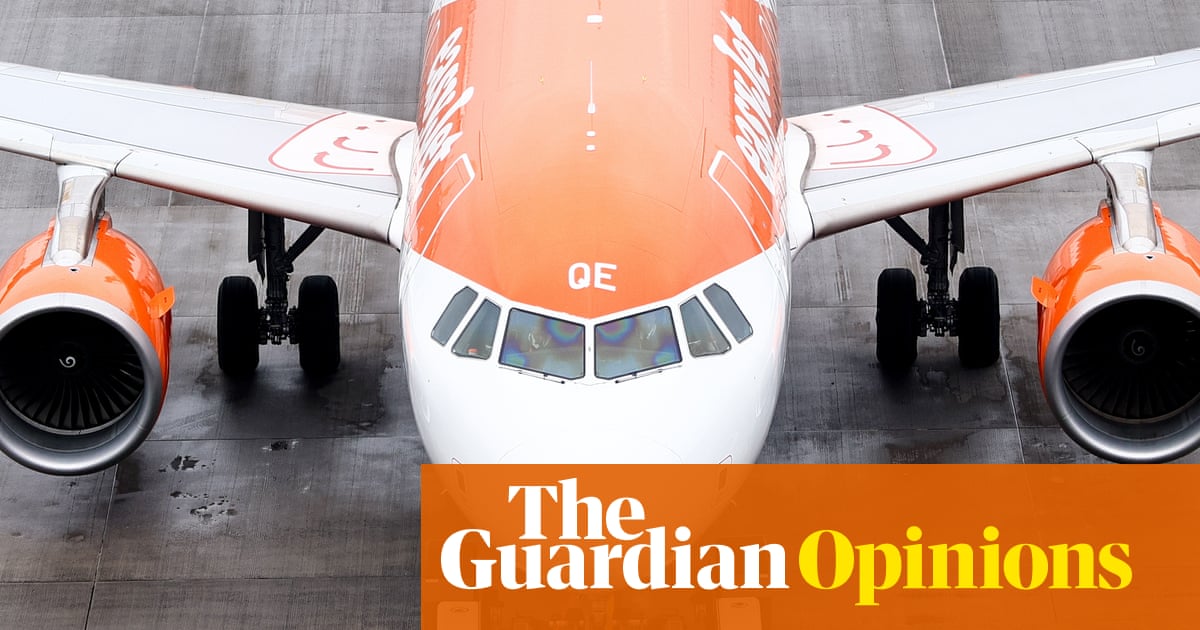
Wizz Air issues profits warning due to Middle East crisis
The travel disruption, the higher oil price and the fall in the euro caused by the Iran war has prompted low-cost airline Wizz Air to issue a profits warning.
Wizz Air warned investors last night that it believes the current crisis in the Middle East will wipe €50m off its profits this financial years.
Wizz had previously predicted that earnings would fall within a profit of €25m to a loss of €25m, so today’s warning means it expects a loss for the year.
The company told the City:
In terms of the expected impact, approximately one third is a result of the cessation of certain scheduled services to the Middle East, with the remainder from the adverse movement in macroeconomic factors as a result of the Iran conflict.
Our assessment of the impact of these macroeconomic factors is based on jet fuel and US$/€ rates as of today, and assumes that these rates will remain at current levels for rest of Fiscal Year 2026.
Key events Show key events only Please turn on JavaScript to use this feature
That drop in the gas price didn’t last long.
UK month-ahead gas prices are up almost 1% at 128p a therm.
European gas prices are up 2.2% at €49.9 per Megawatt hour.
UK construction slump deepens as housebuilding stumbles
The downturn in the UK construction sector shrank at a faster rate last month, dragged down by weaker housing activity.
Data provider S&P Global has reported that construction activity fell for the fourteenth successive month in February, and at a more rapid pace than January.
Building firms reported a sharper decline in new orders, with input cost inflation the highest since July 2025.
This pulled the UK’s construction PMI down to 44.5 in February, down from January’s seven-month high of 46.4, and further away from the 50-point mark showing stagnation.
S&P Global explains:
Residential building remained the weakest-performing segment in February (index at 37.0) and the rate of decline accelerated since January.
Commercial construction activity (46.5) also decreased at a faster pace than at the beginning of the year, but the speed of the downturn was much less marked than seen across the rest of the construction sector. Civil engineering was the only sub-sector to record a slower fall in activity levels during Februar
Markets turnaround
In the last few minutes, an interesting turnaround has taken place in the markets.
The US dollar has lost all its earlier gains, to trade flat against a basket of other currencies.
European stock markets have shaken off their losses, with the FTSE 100 share index now up 36 points (+0.33%).
Wall Street is now expected to open a little higher too….
And happily for consumers, gas prices have now erased their earlier rise.
The rise in the oil price today could soon hurt motorists, as petrol retailers haven’t been slow to lift their prices this week.
Howard Cox, founder of campaign group FairFuelUK, suspects some profiteering is taking place, saying:
“120+ FairFuelUK Supporters have contacted the campaign from all across the UK to report that pump prices have increased in the last 48 hours by an average of 6.7p for petrol and 8.8p for diesel.
Most of these forecourts, many believe, are selling fuel at these higher prices even though they bought these stocks before any wholesale rises. It seems opportunistic profiteering is rife once again.”
Gas price are up again
Gas prices are rising this morning, threatening to push up inflation and hit living standards.
The month-ahead UK gas price is up 6.5% at 135p per therm, wiping out much of yesterday’s fall – and almost twice the lows seen in mid-February.
European gas prices are 7% higher this morning too, at €52 per Megawatt hour.
Susannah Streeter, chief investment strategist at Wealth Club, says:
The heat has turned up under gas prices again, with the global rally taking off once more. The world’s largest LNG export plant in Qatar remains out of action and the key supply route from the Gulf is disrupted. The surge in gas prices is already being felt by energy customers in the UK, with big providers pulling some of the cheaper fixed-price deals.
Household budgets could take a further hit, given that hopes for interest rate cuts are fading. Higher energy prices look set to push up the headline rate of inflation, keeping central bankers wary about voting for further interest rate cuts.
European markets have dipped in early trading, as the recovery in Asia-Pacific markets fails to ripple round to Europe.
The pan-European Stoxx 600 index is down 0.3%, with losses in Frankfurt, Paris, Milan, Madrid and London.
The UK’s FTSE 100 share index is down 20 points, or -0.19%, pulled down bythe drop in airline stocks stic morning. Some mining stocks are also weaker.
The pound is weakening against the US dollar this morning, more than wiping out yesterday’s small recovery.
Sterling is down more than half a cent at $1.331, as the dollar climbs against a basket of other currencies too.
Crude higher after reports Iran hits US oil tanker in Persian Gulf
Iran’s semi-official Tasnim news agency has reported that a US oil tanker in the northern Persian Gulf was hit by a missile launched by Iranian forces.
The news agency reported.
“The tanker was struck this morning in the northern Persian Gulf by forces of the Islamic Revolutionary Guard Corps and is currently on fire.”
The Brent crude oil price is now up 3.3% today, at $84 a barrel.
Bloomberg’s Javier Blas has more details:
This is a significant escalation:@UK_MTO reports an oil tanker that was on anchor offshore Kuwait (and near Iraq too) has been hit by an explosion; oil is spilling and the tanker is tanking on water.
"... There is oil in the water coming from a cargo tank..." pic.twitter.com/zr5Tu7X8LH
Update: the representative of the oil tanker (the Sonangol Namibe) says that a **ballast** tank was hit and there's a hull breach, but there is not indication of an oil leak. The ship was on anchor, in ballast with no cargo. All considered, this is good news!
— Javier Blas (@JavierBlas) March 5, 2026Airline shares fall in London, led by Wizz Air
Shares in Wizz Air have fallen by 6% at the start of trading, as traders react to last night’s profit warning (see here).
Other airlines are down too, with this morning’s rise in the oil price threatening to push up their costs. IAG, British Airways’ parent company, are down 2.6% while easyJet has lost 2.9%.
Warning war could disrupt semiconductor production
The US-Israel war with Iran could disrupt supplies of key semiconductor manufacturing materials, a South Korean ruling party lawmaker said on Thursday.
South Korea’s chip industry – which supplies around two-thirds of global memory chips – was also concerned that a prolonged conflict in Iran would lead to higher energy costs and prices, Kim Young-bae said after meeting executives from companies such as Samsung Electronics and trade groups.
“Officials raised a possibility that semiconductor production could be disrupted if some of these key materials cannot be sourced from the Middle East,” he said at a press briefing cited by Reuters. He added that South Korean firms sourced some key chip-making materials such as helium from the Middle East.
Our Middle East crisis liveblog has more details:
Oil up 2.75% this morning
The oil price is rising again this morning.
Brent crude is up 2.75% at $83.68 a barrel, approaching the 19-month high hit on Monday.
Deutsche Bank analysts say oil is rising because there are no signs of de-escalation yet in the Middle East conflict, telling clients:
That comes as the IRGC said they would intensify and expand strikes in the coming days, while the US confirmed it had sunk an Iranian warship in the Indian Ocean near Sri Lanka.
There was also little clarity over the war’s potential length, with US Defense Secretary Pete Hegseth saying “it could be six, it could be eight, it could be three” weeks. There’s also uncertainty on when shipping will resume through the Strait of Hormuz, and we’ve seen signs of oil importers beginning to adjust behaviour.
For example, Bloomberg reported overnight that China had told the biggest oil refiners to suspend exports of diesel and gasoline.
Bloomberg: China tells top refiners to halt diesel and gasoline exports
Bloomberg are reporting that China’s government has told the country’s largest oil refiners to suspend exports of diesel and gasoline, due to disruption to crude supplies.
It’s a sign that the slowdown in oil shipments out of the Middle East this week is starting to impact Asia-Pacific economies.
Officials from the National Development and Reform Commission, the country’s top economic planner, met refinery executives and verbally called for a temporary suspension of refined product shipments that would begin immediately, according to people familiar with the matter.
The refiners were asked to stop signing new contracts and to negotiate the cancellation of already-agreed shipments.
Wizz Air issues profits warning due to Middle East crisis
The travel disruption, the higher oil price and the fall in the euro caused by the Iran war has prompted low-cost airline Wizz Air to issue a profits warning.
Wizz Air warned investors last night that it believes the current crisis in the Middle East will wipe €50m off its profits this financial years.
Wizz had previously predicted that earnings would fall within a profit of €25m to a loss of €25m, so today’s warning means it expects a loss for the year.
The company told the City:
In terms of the expected impact, approximately one third is a result of the cessation of certain scheduled services to the Middle East, with the remainder from the adverse movement in macroeconomic factors as a result of the Iran conflict.
Our assessment of the impact of these macroeconomic factors is based on jet fuel and US$/€ rates as of today, and assumes that these rates will remain at current levels for rest of Fiscal Year 2026.
Introduction: Asian shares surge, led by South Korea's KOSPI
Good morning, and welcome to our rolling coverage of business, the financial markets and the world economy.
The Middle East conflict continues to grip the markets. After heavy losses earlier this week, Asia-Pacific stocks have bounced back today.
MSCI’s broadest index of Asia-Pacific shares outside Japan jumped by 3.9% today. South Korea’s KOSPI, which posted its biggest ever fall on Tuesday (-12%), has surged by almost 10% today. Japan’s Nikkei is up 1.9%.
Markets are looking calmer, and more positive, reports Michael Brown, senior research strategist at Pepperstone.
That news flow has leaned net positive over the last day or so, although kinetic action continues in the Middle East, not only with President Trump having touted insurance guarantees, and potential navy escorts for tankers in the Strait of Hormuz, but also amid reporting (which was later denied) that Iran had reached out to the US via various back-channels to engage in discussions regarding an end to the war.
Airline shares are among the risers, as more flights take off from the Middle East. Hong Kong’s Cathay Pacific Airways is up 1.34% in late trading, while Australia’s Qantas Airways has gained 1%.
The agenda
-
9am GMT: UK car sales for February
-
9.30am GMT: UK construction PMI for February
-
1.30pm GMT: US initial jobless claims