3 hours ago
14
3 hours ago
14
Anti-datacentre sentiment is growing from across the political spectrum in the US.
More than a dozen states have considered moratoria on datacentres. New York became the first US state to enact a temporary ban last month. Progressive stalwarts Senator Bernie Sanders and Representative Alexandria Ocasio-Cortez have proposed a national moratorium. And even Greg Abbott, the far-right governor of Texas, called for a ban on datacentre development in rural swaths of his state.
Fuelling alarm about datacentres are environmental concerns over water usage and toxic contamination, as well as worries about the kind of society that the artificial-intelligence technologies powered by the new datacentres are creating.
Another of the most politically potent objections strikes closer to the wallet: data centres require enormous amounts of electricity, and that increase in demand can drive up utility bills.
More on datacentres’ impact on electricity costs after this week’s most important reads …
Essential reads
-
‘Our new normal’: how marine heatwaves affect life in British seas
-
Iraq’s ghost villages: Islamic State drove people away – now a new enemy is preventing their return
-
Destroyed crops, riverbed cyclists and a ‘Rock of Starvation’: how drought has devastated the Danube
In focus
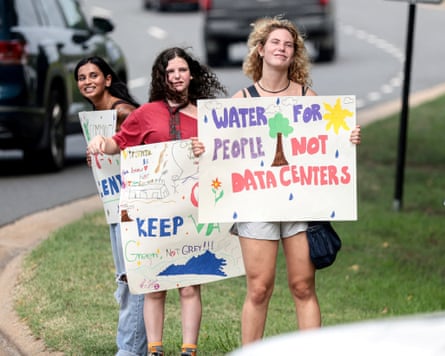
A stunning seven out of 10 Americans are opposed to the construction of datacentres for artificial intelligence in their area, a major poll found in May, with 48% saying they are strongly opposed. About one-fifth of participants specifically pointed to possible negative financial consequences associated with datacentres as a reason for their opposition, including the potential for higher utility bills.
The backlash has created a bind for the Trump administration, which wants the US to become the world leader in artificial intelligence, but has also promised to bring down electricity bills. The US president’s answer so far has been the “Ratepayer Protection Pledge”, a voluntary agreement that he claims will keep families from footing the bill for the AI boom. Nearly 200 companies, utilities, datacentre developers and states signed on to the agreement, the administration announced last month.
The pledge asks datacentre developers and artificial intelligence firms to agree to cover the costs of the electricity they use and the new infrastructure needed to connect their facilities to the grid. The problem, critics say, is that the pledge has no teeth. It is not legally binding, and there are no clear consequences for companies that fail to follow through.
Green groups have been particularly unimpressed: Patrick Drupp, climate policy director at the Sierra Club, last month called it a “paper-thin commitment” for families struggling with their bills, and Lena Moffitt, executive director of nonprofit Evergreen Action, described the announcement as a mere “photo op with big tech”.
after newsletter promotion
Policymakers and developers have put forth other ideas for how to ensure ratepayers don’t bear the brunt of the artificial intelligence boom with their utility bills, from enacting tariffs for datacentres to simply banning the construction of the facilities until further regulations – including on energy usage – can be put in place.
In June, US utility prices were up 4% from a year earlier, federal data shows, outpacing inflation. The concern has shown no signs of dissipating.
Read more:
Bipartisan bill fails to protect US consumers from datacentres’ true costs, critics warn
A huge AI datacentre is planned near Mar-a-Lago. The Everglades could pay the price
‘This is very real redlining’: outrage in Little Rock as two datacentres loom